
Gum disease can start with signs that seem small at first: a little bleeding when you floss, gums that look puffier than usual, breath that comes back too quickly after brushing, or a gumline that looks like it has crept back from the tooth. The concern is not just what you can see in the mirror. It is what may be happening below the gumline, where bacteria can collect in deeper pockets and keep the tissue inflamed.
At Cary Family Dental in Cary, IL, Dr. Niraj Patel offers LANAP laser gum therapy, a high-tech periodontal treatment designed to target diseased tissue and bacteria inside gum pockets. Because LANAP uses laser technology, it can treat affected areas with precision while helping preserve healthy tissue whenever possible. For patients who need more than a routine cleaning, this kind of targeted gum therapy can support healing in a way that feels more modern and controlled.
The first step is a periodontal evaluation. Bleeding gums, swelling, gum recession, lingering bad breath, or teeth that feel like they are shifting can all be signs that your gums need a closer look. From there, Dr. Patel can determine how advanced the gum disease is and whether LANAP laser gum therapy is the right option for your mouth.
What Is Gum Disease?
Gum disease, also called periodontal disease, is an infection and inflammatory condition that affects the gums and supporting structures around the teeth. It usually begins with plaque, the sticky film of bacteria that forms along the gumline. When plaque stays in place too long, it can harden into tartar, and tartar cannot be removed with a toothbrush at home.
The early stage is called gingivitis. During this stage, gums may look red, swollen, or tender. They may also bleed when you brush or floss. Gingivitis can often improve with professional cleaning, better home care, and closer attention to the gumline.
If gum disease progresses, it becomes periodontitis. At that point, the infection has moved deeper. The gums can pull away from the teeth, pockets can form, and the bone around the teeth can begin to break down.
That is where gum disease gets more serious. Teeth need healthy gums and bone for support. If that support starts changing, the problem can become harder to manage later, even if the teeth themselves still look fine from the outside.
Common Signs of Gum Disease
Bleeding gums are one of the most common warning signs. You may see blood in the sink after brushing, notice bleeding when you floss, or find that one area bleeds more than the rest. Occasional irritation can happen, but regular bleeding usually means the tissue is inflamed.
Along with bleeding, swollen or puffy gums can point to inflammation. Healthy gums usually fit snugly around the teeth. When bacteria and tartar collect near or below the gumline, the tissue may become red, tender, shiny, or swollen.
Bad breath that keeps coming back may be another clue. Everyone gets bad breath now and then, but breath that returns soon after brushing can be related to bacteria below the gums. A lingering bad taste can show up for the same reason.
As gum disease becomes more advanced, signs may include gum recession, loose teeth, shifting teeth, spaces that seem larger, or a bite that feels different. Those symptoms suggest the supporting structures around the teeth may be affected, so they should be checked promptly.
Bleeding Gums Deserve a Closer Look
Bleeding gums are easy to explain away, especially when nothing hurts. Some patients assume they brushed too hard. Others stop flossing because they think the floss caused the bleeding. In many cases, though, the gums were already irritated before the floss ever showed up.
If you have not flossed in a while, your gums may bleed when you restart. With gentle daily flossing, mild inflammation may calm down. However, bleeding that continues after consistent home care should be evaluated.
If bleeding shows up in several areas, gingivitis or periodontal disease may be involved. Bleeding around one tooth may be linked to local buildup, a rough spot, an irritated gum area, or a deeper pocket that needs attention.
At Cary Family Dental, Dr. Patel can check whether bleeding is related to plaque buildup, brushing technique, gum disease, medication, or another factor. Once the cause is clear, the next step is easier to choose.
Gum Recession and Exposed Roots
Gum recession happens when the gum tissue pulls back from the teeth. You may notice that a tooth looks longer, the gumline looks uneven, or the tooth feels more sensitive near the root.
From there, it helps to understand why recession happens. It can come from several causes, including gum disease, brushing too hard, clenching or grinding, genetics, thin gum tissue, or past orthodontic treatment. When recession is connected to gum disease, it may also come with deeper pockets, bleeding, inflammation, or bone loss.
Exposed root surfaces can be sensitive because they do not have the same enamel protection as the top part of the tooth. Cold drinks, brushing, sweets, or even air can trigger discomfort. It can feel like the tooth is overreacting, but often the root surface is simply more vulnerable.
If recession is changing or spreading, it is worth scheduling an evaluation. Dr. Patel can help determine whether the gumline is stable or whether gum disease is contributing to the change.
When Bad Breath May Be Related to Gum Disease
Bad breath can come from dry mouth, certain foods, tobacco, medications, reflux, or buildup on the tongue. Even so, gum disease should be considered when bad breath keeps returning despite brushing, flossing, and mouthwash.
Bacteria trapped below the gumline can create odors that are hard to rinse away. Mouthwash may make things feel fresher for a short time, but it cannot remove tartar or clean deep periodontal pockets.
Some patients also notice a bad taste that comes and goes. This can happen when bacteria and inflammation are present around the gums.
If your breath feels stale shortly after brushing, especially along with bleeding, swelling, or gum recession, a periodontal evaluation can help determine whether the gums are part of the problem. Bad breath is not always just a mint problem. Sometimes it is a gum health problem.
What Happens During a Periodontal Evaluation?
A periodontal evaluation gives Dr. Patel a clearer look at how healthy your gums are. The team may measure the small spaces between your teeth and gums, called periodontal pockets. These measurements help show whether the gum tissue is snug around the teeth or pulling away.
The evaluation may also include checking for bleeding, gum recession, tooth mobility, bite changes, tartar buildup, and inflammation. X-rays may be used to review the bone levels around the teeth.
Together, these details help separate mild gum irritation from more advanced periodontal disease. A patient with early gingivitis may need a professional cleaning and better home care. A patient with deeper pockets or bone loss may need more focused periodontal treatment.
If LANAP laser gum therapy may be appropriate, Dr. Patel can explain how it works, why it may help, and what you can expect before, during, and after treatment. A good evaluation should leave you with a clearer picture of your gums, not just a list of dental terms.
What Is LANAP Laser Gum Therapy?
LANAP stands for Laser-Assisted New Attachment Procedure. It is a laser-assisted periodontal therapy used to treat certain cases of gum disease.
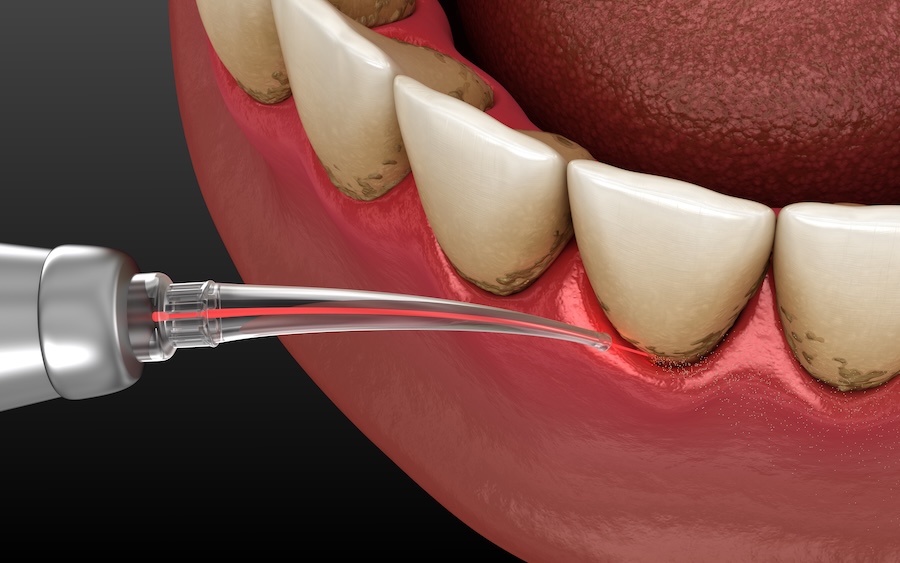
During LANAP, a specialized dental laser targets diseased tissue and bacteria inside periodontal pockets. These are the deeper spaces that can form when gum disease causes the tissue to pull away from the teeth. Because the laser can work inside those pockets with precision, LANAP may be recommended for patients who need more focused gum disease treatment than a routine cleaning can provide.
For some patients, LANAP may be an alternative to a traditional deep cleaning approach, depending on pocket depths, inflammation, bone levels, and overall gum health. Dr. Patel can determine whether LANAP, scaling and root planing, periodontal maintenance, or another treatment option makes the most sense after a periodontal evaluation.
LANAP is not a routine cleaning with a fancier name. It is a high-tech periodontal therapy used when gum disease needs a more targeted approach.
Why Lasers Can Be a Strong Option for Gum Therapy
Laser gum therapy can be helpful because it allows Dr. Patel to treat diseased areas below the gumline with a targeted approach. When bacteria and inflamed tissue are sitting inside periodontal pockets, the laser can help address those areas while preserving healthy tissue whenever possible.
Because LANAP is designed to reduce infection and support healing, it can be a strong option for patients who need periodontal therapy but want a high-tech approach to gum disease care. It is not chosen just because it sounds advanced. It is recommended when the condition of the gums calls for that level of treatment.
The right choice depends on what Dr. Patel finds during the evaluation. Pocket depths, bleeding, gum recession, bone support, tooth mobility, and medical history all help determine whether LANAP is the best fit.
For many patients, the appeal is simple: LANAP treats the problem below the gumline with modern precision.When bacteria are tucked into deeper periodontal pockets, that focused approach can help treat the areas that need attention while preserving healthier tissue whenever possible.
LANAP vs. Deep Cleaning
A deep cleaning, also called scaling and root planing, removes plaque and tartar from below the gumline and smooths the root surfaces so the gums can heal more closely around the teeth. It is a common treatment for gum disease and may be the right choice for many patients.
LANAP takes a different approach by using laser energy to target diseased tissue and bacteria inside periodontal pockets. For some patients, this can offer a more advanced way to treat gum disease and support healing.
Neither option is automatically better for everyone. Dr. Patel will look at the severity of the gum disease, pocket depths, bone levels, inflammation, and how the gums respond before recommending the best treatment path.
This is why guessing at home can only take you so far. Bleeding gums may look simple in the bathroom mirror, but the real answer depends on what is happening under the gumline.
Who May Be a Candidate for LANAP?
Patients with moderate to advanced gum disease may be candidates for LANAP, especially when deeper pockets, bleeding, inflammation, or bone changes are present. A full periodontal evaluation is needed before deciding.
Dr. Patel will look at pocket depths, gum recession, bone levels, tartar buildup, tooth mobility, bite pressure, and your medical history. Health factors such as diabetes, smoking, medications, and immune concerns can affect gum disease and healing.
LANAP may be recommended when gum disease needs more than a standard cleaning or basic non-surgical care. In other cases, scaling and root planing, periodontal maintenance, or referral to a specialist may be more appropriate.
The evaluation helps sort through those options. The goal is not to choose the newest treatment automatically. The goal is to choose the care that best fits the condition of your gums.
What Recovery Can Look Like After LANAP
Recovery after LANAP depends on the severity of gum disease and how much treatment is needed. Many patients return to normal routines fairly quickly, but the gums still need time to heal.
You may receive instructions about eating softer foods, avoiding hard or crunchy foods for a period of time, and cleaning your mouth carefully while the tissue heals. Following those instructions helps protect the treated areas.
After the initial healing period, follow-up visits are also important. Dr. Patel will want to monitor healing, check the gums, and see whether pocket depths are improving.
LANAP can help treat gum disease, but it does not replace daily care or maintenance visits. Long-term gum health depends on keeping bacteria under control after treatment.
Periodontal Maintenance After LANAP
After LANAP or any gum disease treatment, the gums still need close follow-up. Periodontal disease can become active again if bacteria collect below the gumline, especially in areas where deeper pockets were present before treatment.
Periodontal maintenance visits are more detailed than routine cleanings. The team checks healing, removes buildup from areas that are harder to clean at home, and watches for signs that inflammation is returning.
Some patients need these visits more often than twice a year. Dr. Patel may recommend a schedule based on your pocket depths, bone support, home care, and how your gums respond after treatment.
This follow-up helps protect the progress made during treatment. Once gum disease has needed periodontal therapy, the gums usually need more attention than they did before.
What You Can Do at Home for Gum Health
Home care plays a major role in gum health. Brush twice a day with a soft toothbrush, and clean between your teeth daily. If string floss is difficult, floss picks, interdental brushes, or a water flosser may be easier to use consistently.
Use gentle pressure along the gumline. Scrubbing harder does not clean better, and it can irritate the gums or contribute to recession. The goal is to clean the tissue, not punish it.
If you smoke or vape, talk with the dental team about how it may affect your gums. Tobacco can make gum disease harder to control and may slow healing after treatment.
Also, pay attention to changes between visits. Bleeding, swelling, recession, bad breath, loose teeth, or bite changes should not be ignored just because they are not painful.
When to Schedule a Gum Disease Evaluation
Schedule a periodontal evaluation if your gums bleed often, feel swollen, look red, or seem to be pulling away from your teeth. Persistent bad breath, a bad taste, loose teeth, shifting teeth, or changes in your bite should also be checked.
If you have been told you have deep pockets or bone loss, it is better not to wait for pain before getting care. Gum disease is usually easier to manage before teeth become loose.
Patients with diabetes, smoking habits, a history of gum disease, or frequent tartar buildup should be especially careful about gum changes. These factors can make periodontal problems more likely or harder to control.
A periodontal evaluation does not mean you will automatically need LANAP. It gives Dr. Patel the information needed to recommend the right level of treatment.
LANAP Laser Gum Therapy in Cary, IL
Gum disease can affect the tissue and bone that support your teeth, often before it causes major pain. Bleeding gums, swelling, recession, bad breath, deeper pockets, loose teeth, and bite changes are all signs that your gums should be evaluated.
At Cary Family Dental in Cary, IL, Dr. Niraj Patel can examine your gums and determine whether LANAP laser gum therapy may be appropriate. If treatment is needed, he can explain your options in clear terms and help you understand what to expect.
If you are noticing signs of gum disease or have been told you may need periodontal treatment, schedule an evaluation with Cary Family Dental. A closer look at your gums can help you protect your smile before the problem becomes more difficult to treat.
FAQs
What is LANAP laser gum therapy? LANAP stands for Laser-Assisted New Attachment Procedure. It is a laser-assisted periodontal treatment used for certain cases of gum disease.
What are the signs of gum disease? Signs may include bleeding gums, swollen gums, gum recession, persistent bad breath, deep gum pockets, loose teeth, shifting teeth, and changes in your bite.
Is LANAP the same as a deep cleaning? No. A deep cleaning, or scaling and root planing, removes plaque and tartar below the gumline. LANAP uses laser energy to target diseased tissue and bacteria inside periodontal pockets.
Does gum disease always hurt? No. Gum disease can progress without major pain, especially early on. Bleeding, swelling, bad breath, and recession may show up before discomfort does.
Will I need cleanings after LANAP? Yes. Periodontal maintenance is important after LANAP because gum disease can become active again if bacteria build up below the gumline.
When should I schedule a periodontal evaluation? Schedule an evaluation if your gums bleed often, look swollen, recede, or if you notice bad breath, loose teeth, shifting teeth, or bite changes.