
Traditional dentures can work well for many people, but they can also come with some daily frustrations. A lower denture may move when you talk. Food may sneak underneath it at lunch. You may find yourself cutting food into smaller and smaller pieces, not because you want to, but because chewing has become a little too unpredictable.
A loose denture can also change the way you act in public. Some people stop ordering certain foods at restaurants. Others keep denture adhesive close by, just in case. Even laughing hard can feel risky if the denture tends to shift at the wrong time.
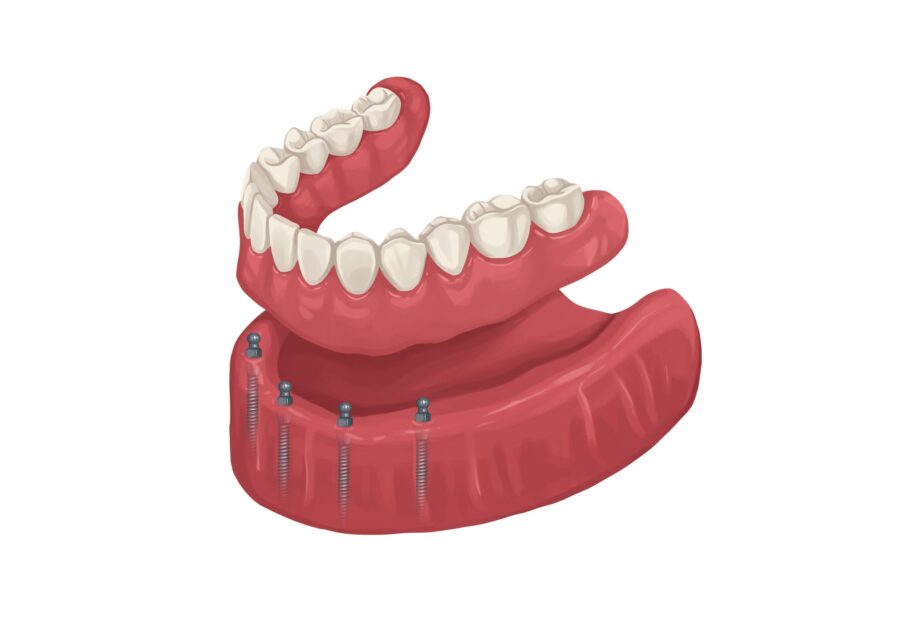
Implant-supported dentures are designed to give dentures a more secure base. Instead of resting only on the gums, the denture connects to dental implants placed in the jawbone. Those implants help hold the denture in place, which can improve chewing, comfort, and confidence during everyday activities.
At Cary Family Dental in Cary, IL, Dr. Niraj Patel can evaluate your gums, jawbone, current denture, and overall oral health to see whether implant-supported dentures may be a good fit. Some patients are tired of a denture they have worn for years. Others are planning ahead before their remaining teeth are removed and want a replacement that feels more stable from the start.
How Implant-Supported Dentures Work
A traditional denture sits on the gums. An upper denture may get some suction from the roof of the mouth, but a lower denture has a harder job. It sits on a smaller ridge of gum tissue while the tongue, cheeks, and jaw are all moving around it.
Implant-supported dentures use dental implants for added support. The implants are small posts placed in the jawbone. After they heal, the denture attaches to them through small connectors, snaps, or a bar, depending on the plan.
Some implant-supported dentures are removable. You can snap them in during the day and take them out at night or for cleaning. Other options are fixed in place and removed only by the dental team during maintenance visits.
The number of implants depends on your mouth, the type of denture, and the amount of support needed. For example, some lower dentures use two implants, while other cases may use more. Upper implant-supported dentures often require different planning because of bone shape, sinus location, and how much support the denture needs. The main idea is simple: the denture has something stronger to hold onto than gum tissue alone.
Why Dentures Can Become Loose Over Time
A denture that fit well years ago can start feeling loose later. That does not always mean the denture was made poorly. The mouth changes after teeth are removed.
Natural tooth roots help stimulate the jawbone. Once the teeth are gone, that stimulation is gone too. Over time, the jawbone can shrink, and the gum ridge under the denture can change shape. As that happens, the denture may begin to rock, rub, or lift during eating and talking.
A reline can sometimes improve the fit by reshaping the inside of the denture to match the gums better. However, a reline does not stop the bone from changing underneath. Denture adhesive may help for a while too, but many people get tired of depending on it every day.
Lower dentures are often the most frustrating because they do not have the same suction that upper dentures can have. Meanwhile, the tongue takes up space and moves constantly, which can push against the denture while you speak or chew.
Implants can help by giving the denture a more stable anchor. The denture remains a denture, but it is no longer relying only on the shape of the gums to stay in place.
How Implant-Supported Dentures Improve Stability
Stability is usually the reason people start asking about implant-supported dentures. They want the denture to stay put while they talk, chew, laugh, or go through a normal day without thinking about it every few minutes.
When a denture connects to implants, it has a firmer base. As a result, there may be less rocking, slipping, and lifting. For many patients, the lower denture feels especially different because it is no longer floating as much on the gum ridge.
Better stability can also make conversations feel easier. A denture that moves while speaking can cause someone to slow down, cover their mouth, or repeat themselves because they are trying to manage the denture while talking. When the denture fits more securely, speaking can feel more natural.
It can also help in small social moments. Ordering food, laughing at a family gathering, talking across a table, or smiling in a photo may feel less awkward when the denture is not shifting around.
Implant support does not mean the denture can be ignored or treated roughly. However, the extra support can make the denture feel much more dependable during the parts of life where slipping used to be a problem.
How They Can Make Chewing Easier
Chewing with a loose denture can turn meals into a strategy session. People may avoid steak, crusty bread, raw vegetables, nuts, apples, corn on the cob, or anything that requires a stronger bite. They may chew mostly on one side or cut everything into tiny pieces.
Even when the denture does not fully come loose, small movements can make eating feel less comfortable. Food can get underneath the denture, and the gums may feel sore by the end of the meal.
Implant-supported dentures can improve chewing because the denture is held more securely. With less movement, biting and chewing can feel more controlled. Many patients find that they can return to a wider range of foods, especially foods they had slowly stopped eating without really noticing.
That said, dentures are not natural teeth, and implant-supported dentures need to be treated with common sense. Chewing ice, biting hard candy, or using teeth to tear open packages can damage the denture or the implant-supported restoration.
Even so, better chewing can change everyday habits. A person may feel more comfortable eating at a restaurant, joining a family meal, or choosing food based on what sounds good instead of what seems safest for the denture.
How Comfort Can Improve
A denture that moves can rub the gums. At first, it may be a small sore spot. Then it may turn into a place that keeps getting irritated every time the denture shifts.
Implant support can reduce some of that movement. When the denture is more stable, there may be less sliding across the gums during eating and talking. Because of that, some patients have fewer sore spots and less pressure in the same areas day after day.
Comfort also comes from a better bite. If a denture hits too hard on one side, the pressure can make chewing uncomfortable even if the denture looks fine. Dr. Patel checks how the teeth come together and can make adjustments if one area is taking too much force.
As your mouth gets used to a new denture, new attachments, or a different bite, speaking and chewing may feel unfamiliar for a short time. Your tongue and cheeks may need a little time to adjust, especially if you have worn a loose denture for years.
Regular follow-up visits help fine-tune the fit. Small adjustments can make a noticeable difference when a denture is rubbing, clicking, or putting pressure in the wrong place.
Who May Be a Good Candidate
Implant-supported dentures may be an option for people who are missing most or all of their teeth and want more stability than a traditional denture provides. They may also be considered for patients who still have some teeth but are planning for extractions and want a more secure replacement.
A good candidate needs enough jawbone to support implants, or a plan to rebuild bone if needed. The gums should be healthy enough for healing, and any active infection or gum disease needs to be addressed before implant placement.
Your medical history also helps shape the plan. Diabetes, smoking, vaping, certain medications, and conditions that affect healing can influence the timing of treatment and how the implants are placed. These factors do not always rule out treatment, but they do need to be discussed before moving forward.
Implant-supported dentures may be worth asking about if your denture shifts when you eat, you rely on adhesive every day, sore spots keep coming back, or you avoid foods because chewing feels unreliable.
Dr. Patel will look at your mouth, your current denture, your bone levels, and your goals before recommending a plan. From there, the number of implants, the type of denture, and the timeline can be matched to your situation.
Removable vs. Fixed Implant-Supported Dentures
There are different styles of implant-supported dentures, and the right one depends on your mouth and preferences.
A removable implant-supported denture snaps onto implants during the day and comes out for cleaning. This option can give the denture more stability while allowing you to remove it at home. Many patients like that the cleaning routine feels familiar.
A fixed implant-supported denture stays in place and is removed only by the dental team during maintenance visits. This may feel more like having teeth that stay in your mouth all the time, but it also requires careful cleaning under and around the restoration.
Neither option is automatically better for everyone. A removable denture may be easier to clean for some patients. A fixed option may feel more secure for others. Bone levels, hand dexterity, budget, maintenance needs, and the amount of support needed all play a role.
At the consultation, Dr. Patel can explain which options fit your situation and what daily care looks like for each one. That is often where patients start to understand what would actually fit their routine.
What the Treatment Process Looks Like
Treatment starts with an exam and imaging. Dr. Patel will look at the gums, jawbone, bite, current denture, and any remaining teeth. If teeth need to be removed, that becomes part of the plan.
If there is enough bone for implants, placement may be scheduled. If there is not enough bone, grafting may be discussed first. Bone grafting can add time, but it may help create better support for the implants.
After the implants are placed, they need time to heal with the bone. During this stage, you may wear a temporary denture or adjusted denture, depending on your plan. Softer foods may be easier for a while, and Dr. Patel will explain how to clean the area while it heals.
Once the implants are ready, the denture can be made or modified to attach to them. Then the fit, bite, and comfort are checked carefully. Small adjustments may be needed as your mouth adapts.
The process is done in stages because the implants need time to become stable before they support daily chewing. Each step helps move the denture toward a better fit, better support, and better function.
Cleaning and Maintaining Implant-Supported Dentures
Implant-supported dentures still need daily cleaning. The denture may be more secure, but plaque and food can still collect around the implants, attachments, and gums.
For removable options, you will usually take the denture out to clean it and clean around the implant attachments in your mouth. A soft brush, denture cleaner, and any recommended tools can help keep the denture and gums in better shape.
For fixed options, cleaning often involves special floss, interdental brushes, or a water flosser to reach underneath the denture and around the implants. The dental team can show you how to clean the areas that are harder to see.
Maintenance visits are also part of the plan. Over time, attachments can wear down, the bite can change, and the denture may need adjustments. The gums and implants also need to be checked regularly.
Good home care helps protect the implants and the denture. Even though implants cannot get cavities, the tissue around them can become irritated or infected if plaque builds up.
When Implant-Supported Dentures May Not Be the First Step
Sometimes implant-supported dentures are not the first treatment to start with. Active gum disease, infection, poor oral hygiene, heavy grinding, or health concerns that affect healing may need attention first.
Bone levels can also affect timing. If the jawbone has shrunk significantly, grafting may be needed before implants can be placed. In some cases, a traditional denture, reline, or other replacement option may be recommended while the long-term plan is being developed.
Cost and maintenance should be part of the conversation too. Implant-supported dentures involve more planning than traditional dentures, and patients need to understand the appointments, cleaning routine, and follow-up care.
The best plan is the one that fits your mouth and your daily life. That means looking at how you eat, how your current denture feels, what kind of maintenance you are comfortable with, and what level of stability you want.
Implant-Supported Dentures at Cary Family Dental in Cary, IL
Implant-supported dentures can make dentures feel more secure by anchoring them to implants in the jawbone. For many patients, that can mean less slipping, fewer sore spots, better chewing, and more confidence during everyday conversations and meals.
At Cary Family Dental in Cary, IL, Dr. Niraj Patel can evaluate your current denture, gums, jawbone, and bite to see whether implant-supported dentures may be a good fit. Call Cary Family Dental to schedule a consultation and talk through your options for a more stable denture.
Image from Authority Dental under CC 2.0