
People lose teeth for all kinds of reasons. A tooth may crack after years of grinding. An old filling may fail. Decay, infection, injury, or gum disease can leave a tooth too damaged or too loose to keep. Sometimes the tooth has been gone for years. Other times, the gap is brand new and still feels strange every time you eat.
Even when the missing tooth is farther back and does not show when you smile, the space can affect more than appearance. Food may catch there. You may start chewing more on the other side without realizing it. The teeth beside the gap can slowly drift or tip toward the open space, which may change the way your bite comes together. Over time, the jawbone in that area can also shrink because it no longer has a tooth root there to stimulate it.
A dental implant can make sense because it replaces the tooth from the root up. The implant sits in the jawbone and supports a crown above the gums, helping fill the space without relying on the neighboring teeth for support. Before moving ahead, Dr. Niraj Patel looks at your gums, bone, bite, and nearby teeth to see whether an implant fits the situation and what steps may need to happen first.
What a Dental Implant Replaces
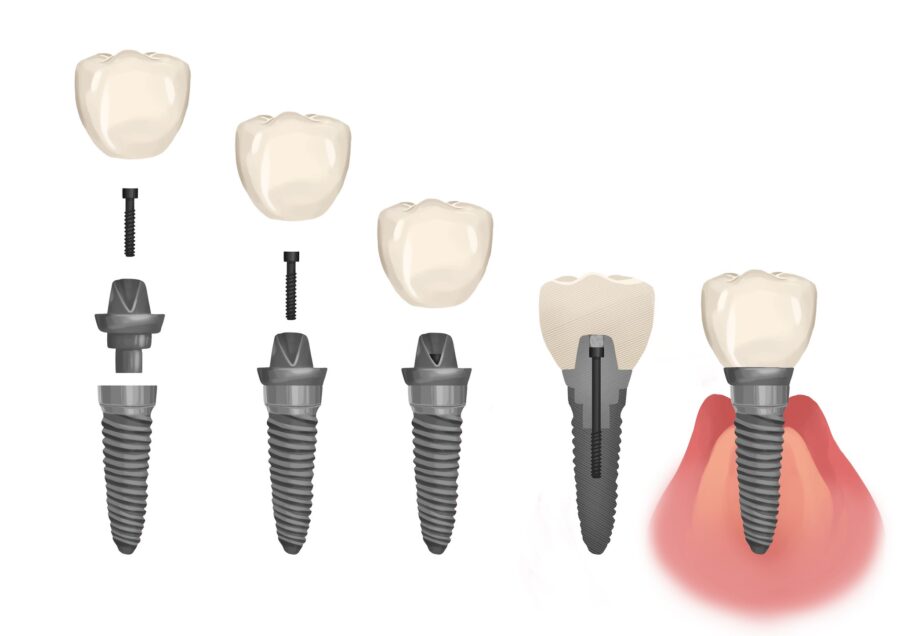
A dental implant is not just the crown you see when someone smiles. It has a few separate parts, and each one has a job. The implant itself is a small post placed in the jawbone where the natural tooth root used to be. After the bone heals around it, the implant can support an abutment, which is the connector piece between the implant and the visible tooth. The final crown is then made to fit over that support.
For a single missing tooth, an implant can fill the gap without putting a crown on the teeth next to it. That is one reason people often compare implants with bridges. A bridge can also replace a missing tooth, but it usually relies on neighboring teeth for support.
Implants can also be used when more than one tooth is missing. A few implants may support a bridge, or they can help hold a denture in place more securely. That can be a big change for someone who has been dealing with a denture that shifts when they talk, laugh, or try to eat something that is not mashed potatoes.
Who May Be a Good Candidate for Dental Implants
A good implant candidate does not need a perfect dental history. Many people considering implants have had fillings, crowns, gum treatment, root canals, broken teeth, or years of wear from grinding. The main question is whether the mouth is healthy enough to support an implant and whether anything needs attention first.
Healthy gums are a big part of the picture. If there is active gum disease, bleeding gums, deep pockets, or infection around nearby teeth, those concerns may need treatment before implant placement. The crown on top of an implant cannot get a cavity, but the gums and bone around it still need to stay healthy.
The amount of jawbone is another piece Dr. Patel will look at. The implant needs enough bone around it for support. When a tooth has been missing for a long time, the bone in that spot may have thinned or shrunk. That does not automatically rule out implants. It may mean bone grafting becomes part of the treatment plan.
Your health history also comes into the conversation. Diabetes, smoking, vaping, certain medications, heavy grinding, and conditions that affect healing can all influence how treatment is planned. Dr. Patel will want to know about those details before moving forward so the plan fits your situation rather than following a standard timeline.
When Bone Grafting May Be Part of the Process
Bone grafting is sometimes recommended when there is not enough jawbone to support an implant securely. This can happen after a tooth has been missing for years, after a large infection, or when gum disease has affected the bone around the teeth.
In simple terms, a graft helps rebuild the area where more support is needed. Sometimes it is done right after a tooth is removed. Other times, it happens later, once someone is ready to replace the missing tooth.
The timeline depends on the area being treated and how much bone is needed. A smaller graft may need less healing time, while a larger graft may need more time before the implant can be placed. In some cases, the graft and implant can be done together. In others, it makes more sense to let the graft heal first.
A graft can lengthen the treatment timeline, but it gives the implant a stronger base to sit in. Dr. Patel can explain whether grafting is needed, what the process would involve, and how it changes the rest of the plan.
The Dental Implant Consultation
The first appointment is where the details start coming together. Dr. Patel will look at the missing tooth area, nearby teeth, the gums, and the way your bite comes together. X-rays or digital imaging may be used to see what is happening below the gumline and how much bone is available.
This visit also gives you a chance to talk about why the tooth was lost. A tooth that cracked after years of clenching may lead to a different conversation than a tooth lost from gum disease or an injury. Knowing the cause helps the office plan for the replacement tooth and look at what may need to change to protect it later.
You may also discuss other ways to replace the tooth, including a bridge or removable option. Some patients already know they want an implant. Others are still weighing the choices and want to understand the time, cost, and number of appointments involved.
This is also the time to bring up the practical stuff. Maybe you have a wedding coming up, a work trip, a vacation, or a stretch when you cannot easily take time away from your normal schedule. Implant treatment takes planning, so those details are worth discussing early.
Removing the Tooth and Preparing the Area
Sometimes the tooth is already gone. Other times, the implant discussion begins because a tooth has reached the point where it cannot be repaired.
If an extraction is needed, Dr. Patel will look at the tooth, the infection level, the surrounding bone, and the gums before deciding what should happen next. In some cases, an implant may be placed soon after the tooth is removed. In other situations, the area needs time to heal first.
The front of the mouth may need extra planning because the gumline and final appearance are easier to see when you smile. Back teeth bring other concerns, including bite pressure and the amount of bone in the area.
Sometimes a bone graft is placed at the time of the extraction to help preserve the area for a future implant. That can be helpful when someone knows they want to replace the tooth but needs healing time before the implant itself is placed.
Placing the Dental Implant
During implant placement, the post is placed into the jawbone beneath the gums. The exact plan depends on the amount of bone available and the location of nearby teeth, roots, nerves, and sinus spaces.
After the procedure, it is normal to have some swelling, tenderness, or soreness for a few days. Softer foods are often easier at first, and you may need to avoid chewing directly on that side while the area heals.
Dr. Patel will give you instructions on how to keep the area clean and what foods to avoid during the first part of recovery. That may mean skipping crunchy snacks, hard bread, or anything that requires a lot of chewing near the implant site for a little while.
Some patients may have a temporary tooth during this stage, especially if the missing tooth is toward the front of the mouth. Others may have a healing cap or temporary solution while the implant heals below the gums.
Healing Before the Final Crown
The implant needs time to heal with the jawbone before it can support the final crown. That healing process creates the stability needed for the crown to handle everyday chewing.
The timeline can vary. Some patients heal faster than others, while bone grafting, implant location, bone quality, and general health can all affect how long the process takes.
You may not notice much happening day to day, which is expected. Most of the healing is taking place below the gums while the bone gradually settles around the implant.
During follow-up visits, Dr. Patel checks the implant area and gums to make sure healing is moving in the right direction. Once the implant is ready, the next step is preparing for the final crown.
The Abutment and Final Crown
Once the implant is stable, an abutment may be placed. This is the small connector that sits between the implant post and the final crown.
After that, the office takes impressions or digital scans so the crown can be made to fit your bite and blend with the teeth around it. The crown is not just picked from a shelf. Its shade, shape, size, and bite all need to work with your smile.
When the final crown is ready, Dr. Patel checks how it fits before securing it to the implant. He will look at how the crown feels when you bite down and whether it lines up comfortably with the surrounding teeth.
A crown that looks good but hits too high when you chew can become annoying quickly. That is why the fit is checked carefully before the final step is complete.
What It Feels Like to Eat With an Implant
Once treatment is finished, many patients are glad to have a tooth back in that space. Food is less likely to catch in the gap, and chewing may feel more balanced again.
It can take a little time to get used to biting and chewing with the new crown, especially if the tooth has been missing for a long time. However, the implant crown should not feel loose, sharp, or like it is taking all the pressure when you bite down.
If something feels off, mention it. A small adjustment can often make the bite feel more natural.
Implants are designed for everyday eating, but they are not a reason to start crunching ice or opening packaging with your teeth. The crown is strong, but it still deserves the same common sense you would use with natural teeth.
How to Care for a Dental Implant
Dental implants need daily care, just like natural teeth. Brush around the gumline, clean between the teeth, and keep up with regular visits.
The crown itself cannot develop a cavity, but plaque can still collect around the gums and implant. Over time, that can affect the tissues and bone that support it.
A toothbrush, floss, floss picks, interdental brushes, or a water flosser may all be part of your routine depending on where the implant is located and what Dr. Patel recommends. The main thing is keeping the area clean consistently instead of treating the implant like it does not need attention because it is not a natural tooth.
If you grind or clench your teeth, a nightguard may also be recommended to protect the implant crown and the rest of your teeth from extra pressure.
When a Dental Implant May Need to Wait
There are times when an implant should not be the first step. Active gum disease, untreated infection, heavy grinding, poor oral hygiene, or a health concern that affects healing may need to be addressed before implant placement.
Some patients also decide that a bridge or removable tooth replacement fits their budget or timeline better. An implant can be a strong option, but it is not the only option.
The right choice depends on what is happening in your mouth now, what treatment will be manageable for you, and how you want the replacement tooth to function long term.
Dental Implants at Cary Family Dental in Cary, IL
A missing tooth can affect the way you eat, the way your bite feels, and the health of the teeth around it. Dental implants can replace that tooth from the root up, but the process may include planning, imaging, grafting, implant placement, healing time, and a final crown.
At Cary Family Dental in Cary, IL, Dr. Niraj Patel can look at the missing tooth area, explain your options, and help you understand whether an implant is the right next step. Call Cary Family Dental to schedule a consultation and talk through your treatment options.
1`
Image from Authority Dental under CC 2.0