
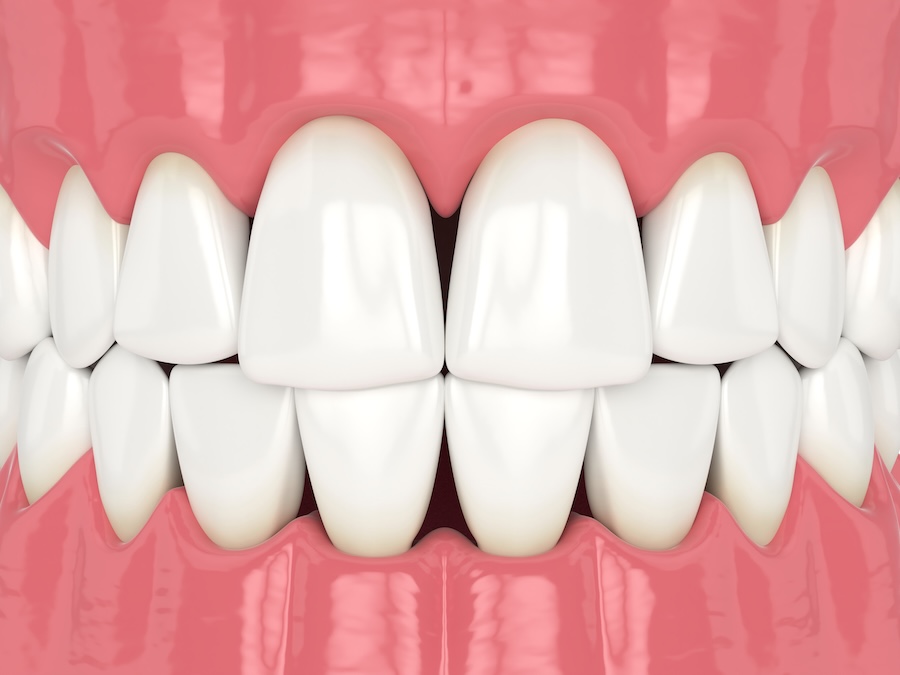
A gap between teeth does not have to be large to bother you. Sometimes it is a small space between the front teeth. Sometimes it is a dark triangle near the gumline that seems to show more in photos than it does in the mirror. Either way, once you notice it, it can be hard to stop noticing it.
Black triangles are especially common near the front teeth. They can make teeth look more separated, even if the teeth themselves are straight. They can also collect food, which adds a practical annoyance to something that may have started as a cosmetic concern. Small gaps can feel similar. They may not hurt, but they can still make the smile look less smooth than you would like.
These spaces can happen for a few different reasons. A lot of the time, black triangles are related to gum recession, which means the gum tissue has pulled back or no longer fills the space between the teeth the way it once did. Tooth shape, bone changes, past orthodontic treatment, shifting teeth, or older dental work can also play a role.
At Cary Family Dental in Cary, IL, Dr. Niraj Patel can look at the cause of the space before recommending treatment. Traditional bonding can help in some situations, but when the gap sits near the gumline or needs a smoother shape between the teeth, Bioclear may be a better fit.
What Black Triangles Are and Why They Show Up
Black triangles are also called open gingival embrasures. The name sounds technical, but it simply describes the open space that can appear between two teeth near the gumline. The space often looks dark because there is nothing filling it in, so the shadow behind the teeth shows through.
A lot of the time, these spaces happen after gingival recession. When the gums recede, the gum tissue pulls back or no longer fills the area between the teeth the way it used to. As that tissue changes, the small triangle-shaped space near the gumline can become more noticeable.
Tooth shape can play a role too. Some teeth are more triangular than rectangular, with a wider edge near the biting surface and a narrower shape closer to the gums. When two tapered teeth sit next to each other, there may be extra space near the gumline.
Black triangles can also become more visible after braces or Invisalign. The teeth may be straighter, but the gum tissue does not always fill every space between them. Because these spaces can be linked to gum recession or bone changes, Dr. Patel will want to check gum health before recommending cosmetic treatment.
Why Small Gaps Can Be Harder to Fix Than They Look
Small gaps may seem easy to close at first glance. Add a little tooth-colored material, polish it, and the space should disappear. In real life, the shape of the repair is usually the harder part. Teeth have curves, they taper near the gums, and they need contact points that look natural while still allowing floss to pass through comfortably.
If material is added in the wrong shape, the tooth can look too wide, too square, or bulky near the gumline. The area also needs to stay easy to clean. A repair that closes the gap but leaves a rough edge or ledge can trap plaque and irritate the gums, which is especially unhelpful when the space started near the gumline in the first place.
The best result should do more than cover the dark space. It should help the tooth look like it always had that shape, with a smooth surface, a natural curve, and a contact area that works for daily brushing and flossing. That is why the technique matters as much as the material.
How Traditional Bonding Works
Traditional bonding uses tooth-colored composite resin to repair or reshape a tooth. The material is placed directly onto the tooth, shaped by hand, hardened with a special light, and polished so it blends with the surrounding enamel.
Bonding can work very well for small chips, worn edges, and minor cosmetic changes. It is often conservative, and in many cases, it does not require much change to the natural tooth. For the right kind of repair, it can be a simple and effective option.
However, bonding can be harder to shape between teeth near the gumline. That space is narrow, and the dentist has to create a smooth contour by hand in an area that is not always easy to access. When the goal is closing a black triangle, even a small amount of extra bulk can make the tooth look unnatural or make flossing feel awkward.
This does not mean bonding is a poor option. It just means it is not always the best tool for every space. A chipped edge and an open gingival embrasure ask for different kinds of shaping, even though both may be treated with tooth-colored material.
What Makes Bioclear Different
Bioclear also uses composite resin, but the technique is different. Instead of placing the material only by hand on the front of the tooth, Bioclear uses clear forms called matrices to help shape the composite around the tooth.
These forms help create a smoother, more rounded contour. That can be especially helpful when treating black triangles because the restoration needs to blend near the gumline and between the teeth, not just cover the front surface.
The composite is warmed so it flows into the form more evenly. Once it is hardened and polished, the result can look less like a patch and more like a natural extension of the tooth.
For the right case, Bioclear can close or reduce a black triangle while keeping the tooth shape cleaner and more balanced than standard bonding might allow. It is still a conservative composite treatment, but the way the material is shaped can make a meaningful difference in tight spaces near the gums.
When Bioclear May Be Better Than Bonding
Bioclear may be a good option when the space is between teeth near the gumline. These spaces need careful shaping because the repair has to look natural, feel smooth, and still be easy to floss. Instead of simply filling a gap, Bioclear can add contour where the tooth narrows, making the space less visible while keeping the tooth from looking overly wide.
Bioclear may also be useful when old bonding has stained, chipped, or started to look uneven. In those cases, replacing or reshaping the area with a more controlled technique may give a cleaner result than adding more composite over an older repair.
However, Bioclear is not for every gap. Larger spaces, severe bite issues, active gum disease, or teeth that need to be moved may require a different plan. Sometimes Invisalign, gum care, veneers, or another treatment should come first.
When Bonding May Still Be the Better Choice
Traditional bonding can still be a strong option for the right concern. If you have a small chip, a rough edge, or a minor cosmetic issue on the front or biting edge of a tooth, bonding may work well.
Bonding can also be a simpler choice when the space is not near the gumline or does not require a wraparound contour. It depends on the shape of the tooth, the location of the repair, and how much material needs to be added.
In some cases, traditional bonding may be more direct and cost-effective. In others, Bioclear may create a smoother shape and better finish. Neither option is automatically better for everyone.
Dr. Patel can explain which option makes more sense after looking at the space, the tooth shape, the gumline, and the way your teeth come together when you bite. The right choice should fit the actual problem, not just the name of the treatment.
Why Gum Health Needs to Be Checked First
Black triangles often sit right next to the gumline, so gum health is a big part of the conversation. If gums are inflamed, bleeding, or receding, cosmetic treatment may need to wait until the tissue is healthier and more stable.
Healthy gums help support a better result. If the gum tissue continues to change after treatment, the space may come back or look different later. This is especially important when black triangles are caused by gingival recession or bone loss.
At Cary Family Dental, Dr. Patel can check for gum recession, bone changes, inflammation, and areas that may need periodontal care before cosmetic work begins. That may include measuring gum pockets, checking for bleeding, and looking at the bone support around the teeth.
That step may not be the part patients are most excited about, but it helps protect the final result. Closing a space looks better when the tissue around it is healthy, clean, and stable.
Could Invisalign Be Needed Before Bioclear?
Sometimes the space is caused by tooth position, not just tooth shape. If teeth are crowded, rotated, tilted, or spaced unevenly, Invisalign may be a better first step.
Moving the teeth can improve alignment and may reduce some gaps. After that, Bioclear may be used to refine the shape if small black triangles remain. This sequence can be helpful when the teeth need to be placed in a better position before cosmetic reshaping makes sense.
The bite also matters. If too much pressure lands on an area where composite has been added, the material may chip or wear faster. Aligning the teeth first may help protect the final result and make the cosmetic work look more balanced.
This is why a consultation is helpful. You may need Bioclear, Invisalign, bonding, or a combination. The best plan depends on what is actually causing the space and how the teeth function together.
What to Expect During a Bioclear Visit
A Bioclear visit starts with a close look at the tooth shape, gumline, bite, and shade. Dr. Patel will also talk with you about what bothers you most, whether that is the dark space itself, food catching between the teeth, old bonding that no longer blends well, or a gap that has become more noticeable over time.
If Bioclear is recommended, the tooth is cleaned and prepared before the clear matrix is placed around it. Warmed composite is then added into the form, hardened, shaped, and polished so the restoration blends with the surrounding enamel and feels smooth near the gumline.
After treatment, the area should feel clean and comfortable. Floss may feel a little different because the shape between the teeth has changed, but it should still pass through the contact without shredding, catching, or feeling blocked. If something feels rough or too tight, Cary Family Dental can check the area and make a small adjustment.
How Long Bioclear Can Last
Bioclear is made with composite resin, so it is not permanent. Still, it can last for years with good care.
How long it lasts depends on your bite, home care, grinding habits, diet, staining habits, and the size of the restoration. Patients who clench or grind may need a nightguard to help protect the composite from excess pressure.
Like natural teeth and other dental materials, Bioclear can stain over time. Coffee, tea, red wine, tobacco, and dark sauces can affect the color. Regular cleanings and good home care help keep the surface looking better.
If the material chips or wears later, it may be repairable. Dr. Patel can monitor the area during routine visits and let you know when polishing, repair, or replacement may be needed.
How to Care for Bioclear
Caring for Bioclear is much like caring for your natural teeth. Brush twice a day, floss daily, and keep up with routine cleanings.
Because these spaces are often near the gums, gentle cleaning along the gumline is especially important. Plaque buildup in that area can irritate the tissue and affect how the restoration looks.
Avoid chewing ice, biting fingernails, opening packaging with your teeth, or using restored teeth as tools. Composite is strong, but it is not made for that kind of pressure.
If you drink coffee, tea, or red wine often, rinsing with water afterward can help reduce staining. Small habits like that can help the result age better without making your routine feel complicated.
Bioclear for Black Triangles and Gaps in Cary, IL
Black triangles, or open gingival embrasures, can be cosmetic, practical, or both. They may show in photos, trap food, or make teeth look more separated than they really are. Traditional bonding can help in some cases, but Bioclear may be a better fit when the space needs a smoother shape near the gumline.
At Cary Family Dental in Cary, IL, Dr. Niraj Patel can evaluate your teeth, gums, bite, and smile goals to see whether Bioclear makes sense. He can also explain when bonding, Invisalign, gum care, veneers, or another option may be a better match.
If you are bothered by black triangles, small gaps, or older bonding that no longer blends well, schedule a visit with Cary Family Dental. A consultation can help you understand what is causing the space and which treatment may give you the cleanest result.
FAQs
What are black triangles between teeth? Black triangles are small dark spaces between teeth near the gumline. They are also called open gingival embrasures and may be caused by gum recession, bone changes, tooth shape, spacing, or orthodontic movement.
Can Bioclear close black triangles? Bioclear may be able to close or reduce black triangles by reshaping the sides of the teeth with composite resin and creating a smoother contour.
Is Bioclear better than bonding? Bioclear may be better for certain black triangles and small gaps because it uses a clear matrix to shape the composite around the tooth. Bonding may still be better for chips or simpler repairs.
Does Bioclear damage teeth? In many cases, Bioclear is conservative and requires little to no removal of healthy tooth structure. Dr. Patel can explain what your specific case would involve.
How long does Bioclear last? Bioclear can last for years with good home care and regular dental visits. Grinding, bite pressure, staining habits, and gum health can affect how long it lasts.
Should I choose Invisalign or Bioclear for gaps? It depends on the cause of the gap. Invisalign may be better if tooth position or bite needs correction, while Bioclear may be a better fit for tooth shape concerns or black triangles near the gumline.