
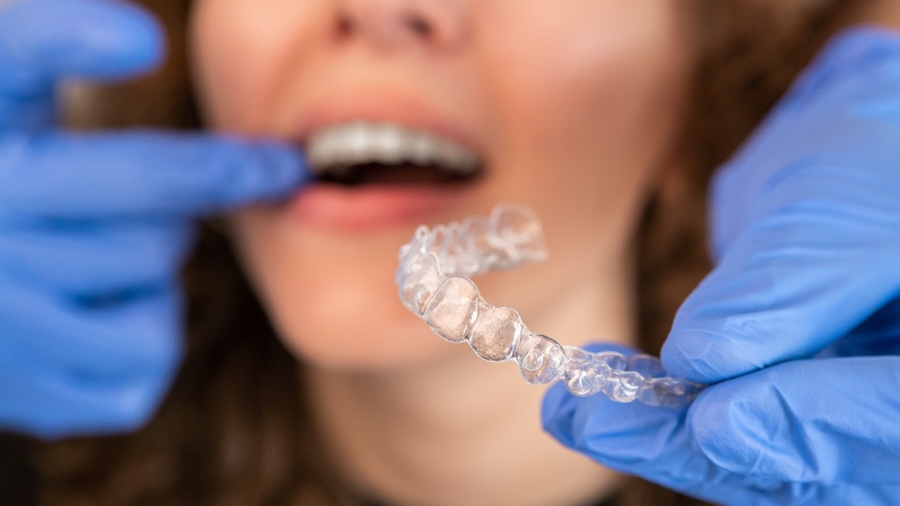
One of the first questions people ask about Invisalign is simple: how long will treatment take? Clear aligners are easier to work into daily life than many people expect, but they still become part of your routine. You wear them most of the day, remove them for meals, clean them, keep track of them, and change trays on schedule.
The timeline depends on your teeth, your bite, and how much movement is needed. A small gap or mild shifting after braces may take less time. Crowding, rotated teeth, bite concerns, or more involved alignment changes can take longer because the teeth need to move in a careful sequence.
At Cary Family Dental in Cary, IL, Dr. Niraj Patel helps patients understand what their Invisalign timeline may look like before treatment begins. The goal is not to rush teeth into place. It is to guide them with control so your smile looks better, your bite feels comfortable, and your results have a better chance of lasting.
How Long Does Invisalign Usually Take?
In general, many Invisalign treatments take about six to eighteen months. Some very minor cases may take less time, while more complex cases can take longer. Your timeline depends on how much the teeth need to move, whether the bite needs correction, and how consistently the aligners are worn.
If you have mild crowding or small spaces, treatment may stay closer to the shorter end of the range. The teeth have less distance to move, and the plan may require fewer aligners.
However, if your teeth are crowded, rotated, tipped, or your upper and lower teeth do not meet well, treatment may need more time. Invisalign works in stages, and each tray is designed to guide a small part of the movement.
During your consultation, Dr. Patel can evaluate your teeth and bite, review your goals, and give you a more specific estimate based on your mouth.
Why Invisalign Timelines Vary
Two patients can both want straighter teeth and still need very different treatment plans. One person may have a small front gap that needs limited movement. Another may have crowding that requires space to be created before the teeth can line up well.
The type of movement also plays a big role. Sliding a tooth slightly into place may be simpler than rotating a tooth or improving the way the upper and lower teeth fit together. Bite changes often take more time because the plan has to account for chewing function, not just how the front teeth look.
Your gum and bone health can also affect planning. Teeth need healthy support to move safely. If gum disease, bone loss, or untreated dental problems are present, those concerns may need attention before clear aligner treatment begins.
An Invisalign consultation looks at more than the teeth you notice first. Dr. Patel will check the bite, spacing, crowding, gum health, tooth shape, and any restorations that may affect how the aligners fit.
Mild Crowding or Spacing May Mean a Shorter Timeline
If your main concern is mild crowding or a small gap, Invisalign may be fairly straightforward. These cases often require fewer aligners because the teeth only need limited movement.
For example, if your lower front teeth shifted a little after years without a retainer, clear aligners may be able to guide them back into better position. A small space between teeth may also close faster than a case involving several rotated or crowded teeth.
Still, a smile can look mild from the front while the bite needs more attention in the back. That is why Dr. Patel will evaluate how your teeth meet, not just how they look when you smile.
If your case is truly mild, the team at Cary Family Dental can explain what kind of timeline may be reasonable. They can also tell you whether Invisalign is the right tool or whether another option may fit your needs better.
Bite Issues Can Add Time
Invisalign can help with more than crooked teeth. It may also be used to improve how the upper and lower teeth fit together. When bite correction is part of the plan, treatment often takes longer.
An overbite, underbite, crossbite, open bite, or deep bite can affect chewing, tooth wear, jaw comfort, and long-term oral health. Even if the front teeth look straighter early in treatment, the bite may still need more time to settle into a better position.
Bite correction may require more aligners, attachments, elastics, or refinements. These additions help the aligners guide tooth movement more effectively, but they also add steps to the process.
During your Invisalign consultation in Cary, Dr. Patel can explain whether your bite is part of the treatment plan. If it is, he can also discuss how that may affect the overall timeline.
Rotated Teeth Can Take Extra Patience
Some teeth are more cooperative than others. A tooth that needs to move slightly forward or backward may respond differently than one that needs to turn in place.
Rotated teeth, especially canines and premolars, can be a little more stubborn. The aligner needs enough grip to guide the tooth, which is why attachments are sometimes placed on specific teeth. These small tooth-colored shapes help the aligner hold on and apply pressure in the right direction.
This does not mean Invisalign cannot handle rotations. It simply means the movement may need more planning and more time.
Patients are sometimes surprised that one or two teeth can affect the overall schedule. But in orthodontic treatment, the last few details can take patience. The finishing touches are often what help the smile look and feel complete.
Your Aligner Wear Time Shapes the Timeline
Invisalign depends on consistency. Most patients are asked to wear their aligners about 20 to 22 hours per day, removing them for meals, drinks other than water, brushing, and flossing.
If the aligners are out too often, the teeth may not move as planned. Then the next tray may feel too tight, may not seat fully, or may stop tracking the movement correctly. Once that happens, the timeline can stretch.
This is where daily routine comes in. Wearing aligners during work, sleep, errands, and regular activities helps treatment stay on pace. Leaving them out for long lunches, coffee breaks, or “just a little while” can add up quickly.
A simple routine helps. Keep the case with you, put the aligners back in after meals, and avoid wrapping them in napkins. More than a few aligners have disappeared that way, and lunch trash is not where anyone wants treatment to go.
Changing Trays Too Soon Can Slow Things Down
It may be tempting to move to the next tray early, especially if the current one feels comfortable. However, the schedule is part of the treatment plan.
Each aligner guides a small amount of movement. The teeth and surrounding bone need time to respond before the next tray takes over. If you switch too soon, the new tray may not fit correctly, and the teeth may fall behind.
Dr. Patel will tell you how often to change aligners based on your case. Some patients change weekly, while others need a different schedule. The timing depends on the planned movement and how well the teeth are tracking.
If a tray feels loose near the end of its wear period, stay with the instructions unless Cary Family Dental tells you to change early. A comfortable tray usually means things are going well, not that the schedule should be skipped.
Attachments May Help Aligners Work Better
Attachments are small tooth-colored shapes bonded to certain teeth during Invisalign treatment. They are not used for every patient, but they are common.
These attachments give the aligners more grip. That extra grip can help with movements that are harder to control, such as rotations, vertical movements, and root positioning. They may feel a little strange at first, but most patients get used to them quickly.
Attachments can support a smoother treatment plan because they help the aligners do their job more accurately. Without them, certain movements may take longer or be less predictable.
If attachments are recommended, Dr. Patel will explain where they go and why they are useful. They are removed when treatment is finished, so they are not a permanent change to your teeth.
Refinements Are Sometimes Part of the Process
Refinements are extra aligners used near the end of treatment when certain teeth need additional adjustment. They are common and do not mean anything has gone wrong.
Even with careful planning, teeth do not always move exactly as expected. A tooth may need a little more rotation. A space may need more closing. The bite may need a final tweak before treatment feels finished. If refinements are needed, Cary Family Dental may take another scan and order additional trays.
Near the end of the finish line, this extra step may feel frustrating. But, we promise this small amount of extra time is worth it to improve your results. Refinements are often the last bit of fine-tuning, especially when a tooth needs a little more movement before the result feels complete.
Missed Appointments Can Delay Progress
Invisalign usually requires fewer visits than traditional braces, but check-ins still matter. These appointments allow Dr. Patel to make sure the aligners are fitting well and the teeth are moving as planned.
If appointments are missed or pushed back too long, small issues may go unnoticed. An attachment may come off. A tray may not be seating fully. A tooth may need extra time before moving to the next aligner.
Regular visits also help keep your treatment organized. You will know when to switch trays, whether adjustments are needed, and whether your timeline is still on track.
If scheduling is difficult, talk with the team at Cary Family Dental. They can help you understand which visits are especially important and how to keep treatment moving without unnecessary delays.
Lost or Damaged Aligners Can Affect Your Schedule
Aligners are clear, removable, and easy to wear, but that also means they can be misplaced. They end up in napkins, pockets, purses, backpacks, cars, and sometimes, unfortunately, the trash.
If you lose or damage an aligner, call Cary Family Dental instead of guessing what to do. Depending on where you are in the series, Dr. Patel may recommend wearing the previous tray, moving to the next one, or ordering a replacement.
Trying to make the wrong tray work can slow progress or make tracking worse. The sooner you call, the easier it is to protect your timeline.
A case is a small thing, but it saves a lot of trouble. Any time the aligners are not in your mouth, they should be in the case to avoid accidentally throwing them out, breaking them, or interested pets.
Your Teeth Need Retainers After Invisalign
After Invisalign treatment, retainers help hold the teeth in their new positions. This step is important because teeth can shift over time, especially if they were crowded before treatment.
Retainers are usually worn full-time at first, then at night as directed. Dr. Patel will explain the schedule that fits your case.
Skipping retainers can undo months of work. Many adults seeking Invisalign are doing so because their teeth shifted after braces years earlier. Retainers help keep that from happening again.
They may not be the most exciting part of treatment, but they protect the result. Once your teeth are where you want them, keeping them there becomes the next job.
How to Keep Your Invisalign Timeline on Track
You cannot control every detail of tooth movement, but your habits do affect the schedule. Wear your aligners as directed, change trays on time, keep appointments, and call if something feels off.
Clean your aligners daily, rinse them when you remove them, and avoid hot water because it can warp the plastic. Brush and floss before putting trays back in whenever possible so food and sugar do not sit against your teeth.
Also, keep your aligner case nearby. It sounds minor, but it helps prevent lost trays and keeps aligners cleaner when you eat.
If a tray feels wrong, does not seat fully, or causes unexpected discomfort, reach out. Small problems are easier to handle early than after several trays have stopped fitting well.
Is Invisalign Worth the Time?
For many patients, Invisalign is worth the time because it can improve alignment without brackets and wires. The trays are clear, removable, and easier to work around during meals and brushing.
However, Invisalign does ask for compliance. You have to wear the trays, clean them, keep track of them, and follow the schedule. Patients who are consistent usually have an easier time staying on track.
The payoff can be a smile that is easier to clean, more balanced, and more comfortable. For someone who has felt self-conscious about crowding, spacing, or shifting after past orthodontic treatment, that can be a meaningful change.
Dr. Patel can help you decide whether Invisalign fits your goals, your bite, and your daily routine. The best treatment plan is one you can actually follow.
Invisalign Treatment in Cary, IL
Invisalign treatment time depends on your starting point, bite, tooth movements, wear time, attachments, refinements, appointments, and daily habits. Some patients finish in a shorter timeline, while more complex cases need additional months to reach the right result.
At Cary Family Dental in Cary, IL, Dr. Niraj Patel can evaluate your smile, explain whether Invisalign is a good fit, and give you a realistic idea of how long treatment may take. If you have crowding, spacing, relapse after braces, or bite concerns, a consultation is the best way to get answers that match your mouth.
If you are interested in Invisalign in Cary, IL, schedule a visit with Cary Family Dental. Dr. Patel and the team can walk you through the process, discuss your timeline, and help you decide whether clear aligners fit your goals.
FAQs
How long does Invisalign usually take? Many Invisalign treatments take about six to eighteen months. Your timeline depends on crowding, spacing, bite needs, tooth movement, and how consistently you wear the aligners.
Can Invisalign work faster than braces? In some mild cases, Invisalign may be faster than braces. However, treatment time depends on the complexity of the case and how well the aligners are worn.
What makes Invisalign take longer? Crowding, bite problems, rotated teeth, missed wear time, lost aligners, missed appointments, and refinements can all add time to treatment.
How many hours a day do I need to wear Invisalign? Most patients need to wear Invisalign about 20 to 22 hours per day. Aligners should only be removed for eating, drinking anything besides water, brushing, and flossing.
Will I need attachments with Invisalign? Many patients need attachments. These small tooth-colored shapes help aligners grip the teeth and guide more controlled movement.
Do I need retainers after Invisalign? Yes. Retainers help keep your teeth in their new position after Invisalign treatment. Without them, teeth can shift back over time.