
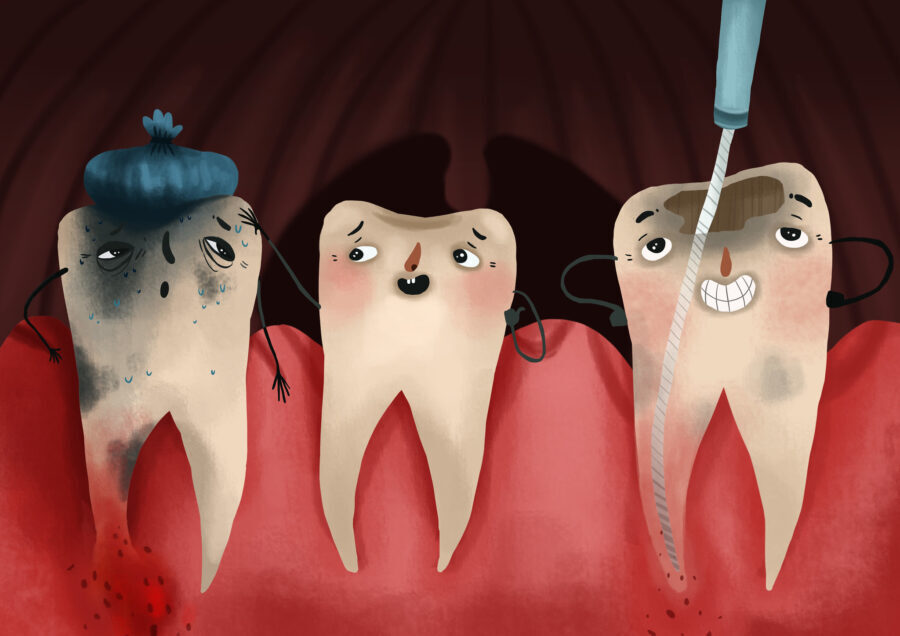
It usually starts with a tooth that doesn’t feel quite right. You might notice it when you drink something cold, or when you bite down in a certain spot. It’s not constant, and it’s not severe, so it’s easy to work around. You chew on the other side, give it a few days, and hope it settles down on its own.
Sometimes it does. But when a tooth keeps coming back to your attention like that, it’s usually a sign that something has already started to change.
A root canal becomes necessary when the inside of the tooth becomes infected. That doesn’t happen all at once. It’s usually the result of something that’s been developing for a while—decay, a crack, or gradual wear that allowed bacteria to move deeper into the tooth. Preventing a root canal comes down to catching those changes before they reach that point.
Decay Doesn’t Stay in One Place
Cavities don’t remain small once they’ve started.
In the early stages, decay affects the outer layer of the tooth. At that point, it’s often painless and easy to treat with a filling. The problem is that without treatment, it continues moving inward. The longer it sits, the closer it gets to the nerve.
Once decay reaches that inner portion of the tooth, bacteria can infect the pulp. That’s when symptoms tend to become more noticeable—lingering sensitivity, pain that doesn’t go away, or pressure when biting. At that stage, a filling isn’t enough to fix the problem.
The difference between needing a filling and needing a root canal often comes down to how early the decay is found and treated.
Cracks Give Bacteria a Way In
Not every tooth that ends up needing a root canal starts with a cavity.
Teeth can develop small cracks from grinding, clenching, or even normal daily use over time. These cracks aren’t always visible, and they don’t always cause immediate pain. In many cases, they just create a slight change in how the tooth feels when you bite.
The issue is that even a small crack creates an opening. Bacteria can enter through that space and gradually work their way deeper into the tooth. If the crack isn’t protected early, the inner portion of the tooth can become affected.
When caught early, a cracked tooth can often be stabilized with a crown. Waiting gives the problem time to spread further.
Sensitivity Is One of the First Signs Something Has Changed
Sensitivity is one of the most common early signs, but it’s also one of the easiest to ignore.
It might show up as a quick reaction to cold drinks or sweets, then disappear just as quickly. Because it isn’t constant, it’s easy to assume it’s nothing serious or something that will go away on its own.
In reality, sensitivity usually means the tooth is more exposed than it used to be. That could be from enamel wear, a developing cavity, or a small crack. The sensation itself isn’t the problem—it’s what’s causing it that matters.
When sensitivity sticks around or keeps coming back in the same spot, it’s worth having it evaluated before it progresses.
Waiting Changes What Treatment Looks Like
The timing of when you address a problem makes a noticeable difference in what needs to be done.
When an issue is caught early, treatment is usually more straightforward. A small filling or minor repair can stop the problem before it spreads. The tooth remains stable, and the process is relatively simple.
When the same issue is left alone, it continues to develop. Once the nerve is involved, the approach has to change. A root canal is needed to remove the infection and preserve the tooth structure that’s left.
That shift is what most people don’t see happening. The tooth doesn’t go from fine to needing a root canal overnight—it moves through stages.
Daily Habits Affect How Fast Problems Develop
What you do consistently matters more than occasional changes.
Brushing and flossing remove the buildup that allows bacteria to sit on the teeth long enough to cause decay. Missing those areas regularly gives bacteria more time to break down enamel and start that process.
Diet also plays a role, especially when it comes to frequency. Sipping on sugary or acidic drinks throughout the day exposes your teeth repeatedly, which makes it easier for decay to develop.
It doesn’t have to be perfect. But small habits, done consistently, either slow problems down or give them a chance to move faster.
Regular Visits Catch Problems Before You Feel Them
One of the more frustrating parts of dental issues is that you don’t always feel them early.
By the time something hurts consistently, it’s often already progressed. That’s why regular visits matter, even when everything seems fine.
During a routine cleaning and exam, Dr. Patel is looking for early signs of decay, small cracks, or areas that are starting to weaken. X-rays can also show what’s happening between teeth or below the surface, where you wouldn’t notice it on your own.
Catching something at that stage usually means simpler treatment and fewer complications.
Preventing Root Canals in Cary, IL at Cary Family Dental
At Cary Family Dental in Cary, IL, Dr. Niraj Patel focuses on identifying problems early, before they reach the point where more involved treatment is needed. Many of the issues that lead to root canals start as small changes that are easy to overlook at first.
If a tooth has felt different—whether it’s sensitivity, pressure, or something you can’t quite pinpoint—it’s worth having it checked. A comprehensive dental exam can help determine what’s going on and address it before it progresses further.
See Our Complete List of Dental Services
Image from Authority Dental under CC 2.0