
Jaw discomfort has a way of showing up in small but noticeable ways. Some patients wake up with tension near the temples. Others notice clicking when they open their mouth, or a feeling that their bite doesn’t quite come together evenly. These symptoms are often connected to the temporomandibular joint, commonly referred to as the TMJ. This joint connects the lower jaw to the skull and allows the jaw to move smoothly while chewing, speaking, and yawning.
TMJ issues can develop for several reasons, including muscle tension, teeth grinding, or bite misalignment. In some cases, improving the way the teeth fit together can reduce strain on the jaw. That is where orthodontic treatment, including Invisalign, sometimes becomes part of the conversation. At Cary Family Dental in Cary, IL, Dr. Niraj Patel helps patients evaluate the different factors that may contribute to TMJ symptoms, including how the bite functions during everyday use.
Understanding TMJ Symptoms
The temporomandibular joint is one of the most active joints in the body. Every time you chew, talk, or swallow, the joint and surrounding muscles are working together. When something interferes with that balance, symptoms may appear gradually. Patients with TMJ concerns sometimes notice:
-
Clicking or popping sounds in the jaw
-
Jaw soreness or fatigue when chewing
-
Headaches near the temples
-
Tightness in the jaw muscles
-
Difficulty opening the mouth fully
These symptoms do not always have a single cause. In many cases, several factors contribute at once, which is why a thorough evaluation is important.
How Bite Alignment Can Influence the Jaw
Your bite refers to the way the upper and lower teeth come together when the mouth closes. Ideally, teeth contact evenly so the jaw muscles and joints can function without unnecessary strain. When the bite is misaligned—whether from crowding, shifting teeth, or uneven contact points—the jaw sometimes compensates by adjusting its position during movement. Over time, that extra effort can place stress on the jaw muscles and joints.
It’s not uncommon for patients with TMJ discomfort to discover that bite alignment is part of the picture. Addressing the bite does not solve every TMJ issue, but in some cases it can help reduce the mechanical strain that contributes to symptoms.
When Invisalign May Help
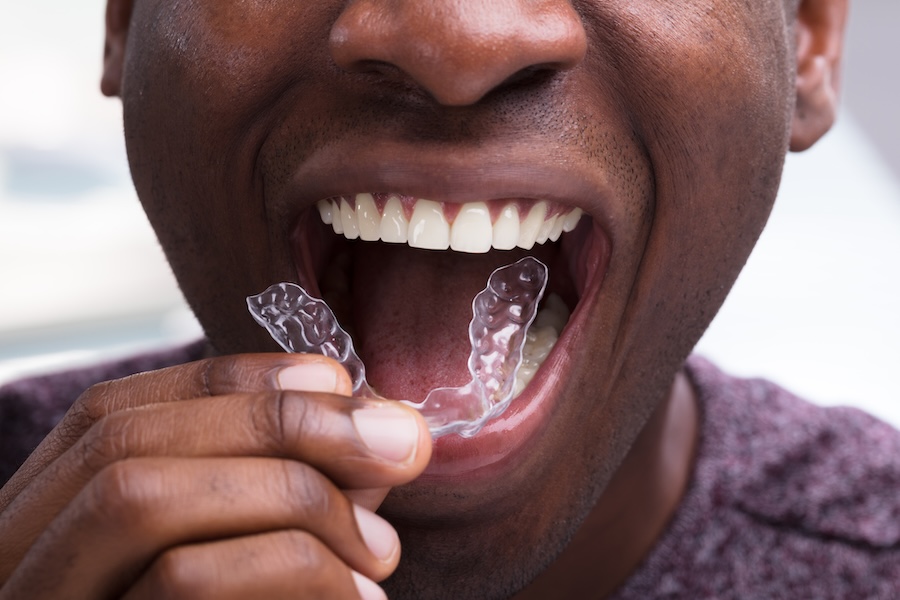
Invisalign uses a series of clear aligners to gradually move teeth into improved alignment. Each aligner applies small, controlled movements that shift the teeth over time. For patients with bite-related concerns, this type of orthodontic treatment may help improve how the upper and lower teeth meet when biting and chewing.
That adjustment can sometimes relieve pressure on certain areas of the bite. When the teeth come together more evenly, the jaw muscles may not have to work as hard to compensate for uneven contact. It’s important to note that Invisalign is not a universal treatment for TMJ disorders, but it may play a role when bite alignment contributes to the problem.
The Role of Invisalign Aligners and Retainers
Some patients also notice that wearing Invisalign aligners provides a slight cushioning effect between the upper and lower teeth. Because the trays create a thin barrier, they may reduce direct tooth contact during the day and at night while the aligners are being worn.
For certain patients, this added separation can ease mild jaw tension.
After Invisalign treatment is complete, retainers may provide a similar effect. However, it’s important to understand that aligners and retainers are not designed to function as protective appliances for grinding. If a patient grinds or clenches their teeth frequently, a custom nightguard is still the best option. Nightguards are specifically designed to absorb bite forces and protect both the teeth and the jaw joints.
For patients who do not grind heavily, though, the aligners or retainers themselves may offer a small amount of relief simply by reducing direct tooth-to-tooth pressure.
Other Factors That Affect TMJ Symptoms
Bite alignment is only one piece of the TMJ puzzle. Other common contributors include:
-
Teeth grinding or clenching
-
Muscle tension related to stress
-
Previous jaw injuries
-
Arthritis in the joint
-
Habitual chewing on one side of the mouth
Because several factors may overlap, TMJ treatment often focuses on improving overall balance rather than relying on a single solution. Some patients benefit from nightguards that protect the teeth from grinding. Others may benefit from orthodontic adjustments, muscle relaxation strategies, or a combination of approaches.
Evaluating TMJ Symptoms at Cary Family Dental in Cary, IL
Jaw discomfort can have several underlying causes, which is why a careful evaluation is important before deciding on treatment. Bite alignment, muscle activity, and joint function all play a role in how the jaw operates day to day.
At Cary Family Dental in Cary, IL, Dr. Niraj Patel works with patients to evaluate TMJ symptoms and determine whether bite alignment may be contributing to the issue. When appropriate, Invisalign may be considered as part of a broader plan to improve how the teeth fit together.
If you have noticed jaw clicking, muscle fatigue, or bite changes, scheduling an exam at Cary Family Dental in Cary, IL can help identify possible causes and determine the next steps for restoring comfort and balance.