
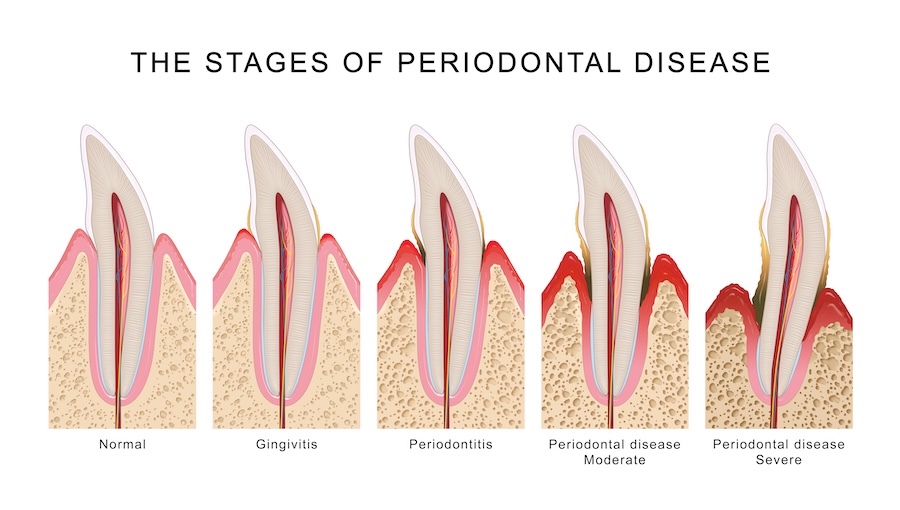
Bleeding gums can be easy to dismiss at first. Maybe you see a little pink in the sink after flossing, or one area looks puffier than it did a few months ago. However, if the bleeding keeps coming back, your gums are swollen, or your breath changes even though you are brushing, we want to take a closer look.
At Cary Family Dental in Cary, IL, Dr. Niraj Patel and our hygiene team check more than whether your teeth have cavities. We look at the health of the gum tissue, measure the spaces around the teeth, review bone levels when needed, and pay attention to bleeding, recession, and inflammation. Then, if we find gingivitis or periodontitis, we can match treatment to what is happening below the gumline.
It also helps to think about how much tissue is involved. If all of your gum tissue were laid out flat, it would cover a surprisingly large area, roughly around the size of your palm. If an area of your body that large were red, inflamed, and bleeding regularly, you would probably want to know why, and the same applies to your gums.
Gum Disease Treatment in Cary, IL Starts With Inflammation
Healthy gums usually fit closely around the teeth and do not bleed regularly when you brush or floss. When bacterial plaque stays along the gumline, the immune system responds, and the tissue can become red, puffy, tender, or prone to bleeding. At first, that inflammation may be limited to the gums.
That early stage is gingivitis. At this point, there has not been permanent loss of the bone or connective tissue supporting the teeth. With professional cleaning and consistent plaque removal at home, gingivitis can often be reversed.
However, periodontitis goes deeper. The gums can begin pulling away from the teeth, bacterial deposits can collect below the gumline, and the inflammatory process can damage the attachment and bone around the teeth. From there, treatment focuses on reducing bacteria and inflammation, encouraging the tissue to heal more closely around the tooth, and protecting the support that remains.
Bleeding Gums Are Worth Paying Attention To
Seeing a little blood after flossing an area you have not cleaned in a while is different from seeing blood every morning. If the same areas bleed again and again, the tissue is inflamed. Even if nothing hurts, repeated bleeding deserves a closer look.
Sometimes bleeding shows up around only one or two teeth. In other cases, patients notice it across much of the mouth when they brush or floss. Along with the bleeding, you may also see swelling or notice that the gumline feels tender in certain spots.
Smoking can make this sign less obvious. Nicotine can reduce visible bleeding by affecting blood flow in the gum tissue, even when periodontal disease is present. So while bleeding is common with gum inflammation, not seeing blood does not always mean the gums are healthy.
Swollen or Red Gums Can Be an Early Clue
Inflamed gums often look puffier or darker than the surrounding tissue. You may notice that the gumline looks rounded around a tooth instead of fitting closely against it. Meanwhile, brushing that area may feel tender even though the tooth itself feels fine.
Plaque is one of the main drivers of that inflammation, but hardened tartar can make the problem harder to control at home. Once plaque mineralizes into tartar, brushing and flossing will not remove it. At that point, professional cleaning is needed to clear the deposits from the tooth surface.
If the inflammation is still gingivitis, cleaning the area thoroughly and improving plaque control may be enough to get the tissue healthier again. However, deeper pockets, attachment loss, or bone changes point toward periodontitis. Then, the gums need more than a routine preventive cleaning.
Persistent Bad Breath Can Come From Below the Gumline
Bad breath after coffee, garlic, or a night of sleeping with your mouth open is one thing. Breath that comes back quickly after brushing and flossing can be different, especially when it is paired with bleeding or swollen gums.
As periodontal pockets deepen, bacteria and debris can collect below the gumline where your toothbrush cannot reach well. Mouthwash may cover the odor for a while, but it does not remove tartar or bacterial deposits deep inside those pockets.
If you have been fighting the same bad breath for weeks, mention it when you come in. We can check the gums along with the teeth and see whether periodontal inflammation is part of the problem.
Gum Recession Has More Than One Cause
Recession happens when the gumline moves away from its earlier position and exposes more of the tooth or root. Sometimes patients notice that one tooth looks longer than the tooth beside it. Others first notice a sharp reaction to cold near the gumline.
Periodontal disease can contribute to recession, but it is not the only cause. Brushing too aggressively, tooth position, thin gum tissue, and bite forces can also affect where the gumline sits. Because of that, we look at the surrounding tissue, bone levels, pocket depths, and bite before deciding what is behind the recession.
If inflammation and bone loss are also present, treating the periodontal disease comes first. Once the gums are more stable, we can see how much recession remains and whether anything else needs to be addressed.
Loose or Shifting Teeth Need an Evaluation
A permanent tooth that starts feeling loose deserves a closer look. You may notice movement when you chew, see a new space forming between teeth, or feel that one tooth no longer meets the opposing teeth in quite the same way. Those changes can have several causes, including advanced periodontal disease.
As bone and attachment are lost around a tooth, the tooth has less support. Meanwhile, normal chewing forces or grinding can place additional pressure on an already weakened area. That can lead to mobility or gradual tooth movement.
A loose tooth does not automatically mean the tooth has to come out. We need to see how much support remains, whether active inflammation is present, and what is happening with the bite. Then, Dr. Patel can talk with you about the options for stabilizing the area and controlling the periodontal disease.
Periodontal Pockets Help Us See What Is Happening Below the Gumline
Gum disease can progress without causing much pain, so periodontal measurements give us information you cannot get from symptoms alone. During an exam, we measure the spaces between the teeth and gums and check for bleeding, recession, tartar, and other signs of inflammation.
We also look at bone levels on X-rays when appropriate. A deeper pocket with bleeding and bone loss tells us something different from one isolated deeper measurement around otherwise healthy tissue. Meanwhile, recession, tooth mobility, and changes in the bite can add more detail to what is happening around the tooth.
Once we have those measurements and findings, we can tell whether the problem is gingivitis, periodontitis, or another gum concern. Mild inflammation may respond well to professional cleaning and better plaque control at home, while deeper pockets and attachment loss call for periodontal treatment.
Periodontal Treatment Focuses on Bacteria and Inflammation
When periodontal disease has moved below the gumline, treatment needs to reach the areas that brushing and flossing cannot. Scaling and root planing is used to remove bacterial deposits, plaque, and tartar from the tooth surfaces below the gumline. The goal is to reduce the bacterial load and give the inflamed tissue a better environment for healing.
As those deposits are removed and inflammation begins to settle, the gum tissue may tighten and heal more closely around the teeth. We also want to preserve healthy tooth structure while cleaning the areas that are keeping the tissue inflamed. Then, at follow-up visits, we look at bleeding, pocket depths, tissue response, and how well the gums are staying clean at home.
Depending on how much of the mouth needs treatment, we may treat different areas at different visits. Afterward, periodontal maintenance becomes important because bacteria can collect again in deeper areas. Keeping those sites clean gives us a better chance of keeping the disease controlled.
Why Gum Inflammation Deserves Attention
The mouth is connected to the rest of the body, and chronic gum inflammation is still inflammation. Periodontal disease involves an ongoing immune response to bacteria around the teeth, while research continues to show associations between periodontal disease and several aspects of overall health. That does not mean gum disease directly causes every condition linked with it, but persistent inflammation in the mouth should not be dismissed.
If the gum tissue around all of your teeth were spread out, the total surface area would be much larger than most people picture when they think about bleeding gums. That is why a little blood in the sink can be more meaningful than it first appears. We are looking at an inflammatory process that can involve a broad area of tissue, not one tiny spot.
Our goal is to reduce the bacterial burden, calm the inflammation, and help the tissue heal as well as it can around the teeth. Then, regular periodontal maintenance helps us keep those areas from becoming inflamed again.
Laser Gum Therapy and LANAP at Cary Family Dental
For some patients, periodontal treatment may also include laser therapy. Dr. Niraj Patel is certified in LANAP, or Laser-Assisted New Attachment Procedure, which uses a specialized laser to target bacteria and diseased tissue inside periodontal pockets while preserving healthy tissue whenever possible. Cary Family Dental also uses ultrasonic scalers to remove disease-causing tartar as part of periodontal care.
LANAP can be used when gum disease has progressed beyond what routine preventive care can manage. During treatment, we remove deposits from around the teeth and use the laser as part of a protocol designed to reduce bacteria, remove diseased tissue, and support healing and reattachment around the tooth roots. Because the laser works inside the periodontal pocket, it allows us to treat the diseased area without the cutting and suturing used in traditional periodontal surgery.
However, not everyone with bleeding gums needs LANAP. Mild gingivitis and advanced periodontitis are very different situations, so we start with the gum exam, periodontal measurements, and X-rays when needed. Then, Dr. Patel can tell you whether professional cleaning, scaling and root planing, LANAP, or another approach fits what we are seeing.
Bone Loss Can Happen Before You Feel Anything
Periodontitis does not stop at the gumline. The inflammation can affect the bone and connective tissues that support the teeth, and bone loss often happens without the kind of pain people expect from a dental problem.
That is why X-rays and periodontal measurements work well together. The pocket measurements show us what is happening around the gums, while X-rays can help us see changes in the supporting bone. If bone levels have changed since earlier images, we can factor that into the treatment plan.
Once periodontal bone has been lost, our first goal is to stop additional breakdown. In some situations, certain periodontal treatments may also support regenerative healing. However, the treatment recommendation depends on the location and extent of the damage.
Smoking Can Hide Some of the Warning Signs
Smoking raises the risk of periodontal disease and can make the gums slower to heal after treatment. At the same time, nicotine can suppress some of the bleeding that might otherwise alert you to inflammation. Someone who smokes may have significant gum disease without seeing much blood when brushing.
Because of that, tell us if you smoke or use tobacco, even if your gums do not seem irritated. It helps us interpret what we see during the periodontal exam and gives us a more accurate picture of your risk.
Tobacco use can also affect healing after scaling and root planing, LANAP, implants, and other dental procedures. We are not asking so we can lecture you. We need the information because it affects the gums and the way we plan your care.
Diabetes and Gum Disease Can Affect Each Other
Diabetes and periodontal disease have a two-way relationship. Poorly controlled blood sugar can make gum inflammation harder to manage, while periodontal inflammation may make blood sugar control more difficult.
If you have diabetes, we pay close attention to bleeding, pocket depths, bone levels, and how the gums respond after treatment. We also want to know if your medications or blood sugar control have changed since your last visit.
Periodontal treatment does not replace medical diabetes care. However, keeping gum inflammation under better control is one part of taking care of your oral health alongside the rest of your health.
Periodontal Maintenance Helps Keep Gum Disease Controlled
After treatment for periodontitis, many patients need periodontal maintenance rather than returning to a standard preventive cleaning schedule. These visits focus more closely on areas where deeper pockets or attachment loss have already occurred.
We continue removing plaque and tartar around and below the gumline while rechecking bleeding, pocket depths, recession, and inflammation. If an area begins changing again, we can address it before it has more time to progress.
The timing of these visits depends on your periodontal condition and how quickly buildup returns. Some patients need to be seen more often than every six months, particularly when there is a history of deeper pockets or bone loss.
Home Care Has to Reach the Gumline Too
Professional treatment can remove deposits that you cannot reach at home, but daily plaque removal is still part of keeping periodontal disease under control. Brushing along the gumline and cleaning between the teeth helps limit the bacterial film that can restart inflammation.
Floss works well for some patients, while others do better with interdental brushes, a water flosser, or another tool. Bridges, implants, crowded teeth, and wider spaces between teeth can all change which option is easiest to use.
We can show you where plaque tends to collect in your mouth and help you choose something you will use consistently. A routine that fits your teeth and your day is more useful than giving you a long list of tools that never make it out of the bathroom drawer.
Do Not Wait for Gum Pain
Periodontal disease can progress for quite a while without causing a toothache. Bleeding, swelling, recession, persistent bad breath, deeper pockets, or shifting teeth may show up first. So if you keep noticing one of those changes, bring it up before pain becomes the reason you finally call.
Sometimes we find gingivitis that can improve with a professional cleaning and better plaque control. However, deeper pockets, attachment loss, or bone changes may mean scaling and root planing, LANAP, or ongoing periodontal maintenance is needed.
The earlier we know what is happening, the sooner we can start reducing the bacterial buildup and inflammation. Then, we can keep following the gums and see how the tissue responds over time.
Gum Disease Treatment at Cary Family Dental in Cary, IL
If your gums bleed regularly, look swollen, have started receding, or seem different from the way they used to, tell us. At Cary Family Dental, Dr. Niraj Patel and our hygiene team can measure the gums, look for inflammation and bone changes, and explain what we are seeing in plain language. We offer periodontal care including scaling and root planing, and Dr. Patel is certified in LANAP laser gum therapy for patients who need a more advanced approach.
Our office is located at 835 Feinberg Ct., Suite 117, in Cary, IL. If you have been seeing blood when you brush, dealing with persistent bad breath, or have been told you have periodontal pockets or bone loss, call Cary Family Dental to schedule an evaluation with Dr. Patel and our team. We can take a closer look at your gums and talk through what treatment makes sense for you!