
When a tooth hurts badly enough to interrupt dinner or wake you up at night, keeping it may suddenly feel less important than stopping the pain. You may wonder whether a root canal will solve the problem or whether removing the tooth would be more sensible. The decision depends on the cause of the pain, the remaining tooth structure, and how well the tooth could function after treatment.
At Cary Family Dental in Cary, Illinois, Dr. Niraj Patel and Dr. Rachel Ehlers provides root canal treatment and extractions, with many procedures completed here in our office. We examine the tooth and its supporting tissues before recommending either approach. If the tooth can be restored predictably, we’ll explain the repair, while a tooth with damage beyond repair may need removal and a plan for the space afterward.
The Nerve and Remaining Tooth Structure
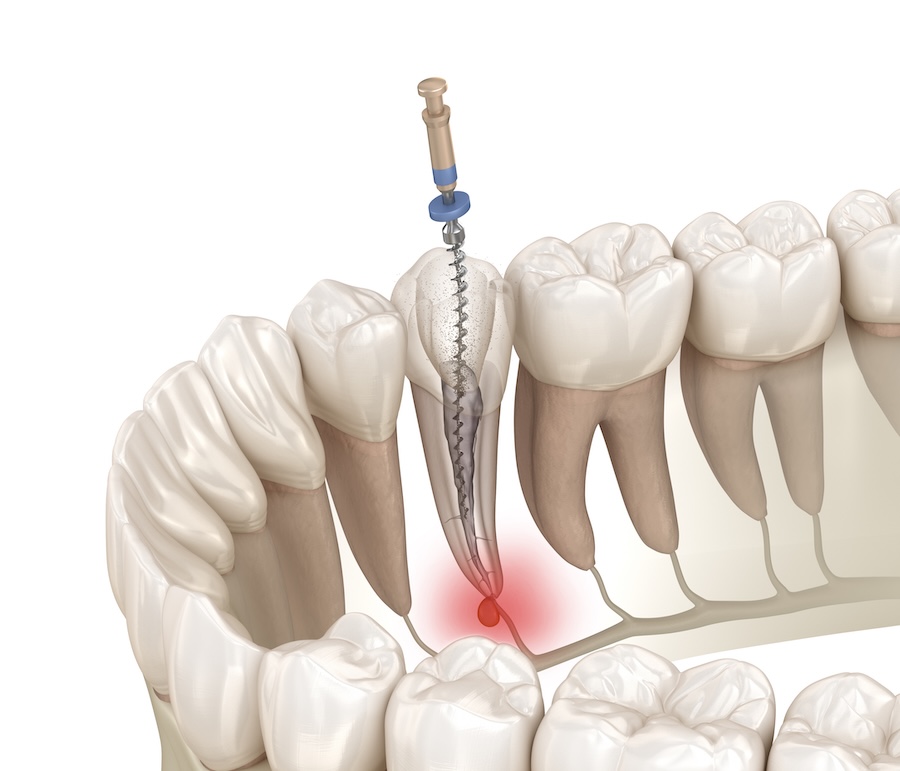
To decide whether a root canal could help, we first check the pulp, the tissue containing nerves and blood vessels inside the tooth. Deep decay, a crack, or an injury can leave that tissue inflamed or infected, causing a lingering ache or sensitivity. If the tooth can be restored, root canal treatment removes the damaged pulp so we can clean and seal the canals inside the roots.
After the canals are treated, we still need enough healthy tooth to hold a filling or crown securely. A tooth with an infected nerve may be repairable even when it hurts enough that you want it out. However, if a root has split or decay reaches too far below the gums, treating the nerve will not leave us with a tooth we can reliably restore.
We Check How Much Tooth Remains
An old filling may occupy much of a tooth before a new area of decay develops beside it. Once the decay and weakened material are removed, we need to see whether enough solid tooth remains for a restoration. A crown often helps support a heavily damaged back tooth after root canal treatment, while the final restoration depends on the tooth and the forces it carries.
For a crown to hold up, its edge needs to meet solid tooth so bacteria cannot easily collect beneath it. If the damage reaches deep below the gums, another procedure may be needed to expose enough healthy tooth for that seal. Sometimes too little tooth remains, and we’ll explain why a repair would be unlikely to last.
A Crack Can Change the Options
Small surface lines in enamel are different from a fracture that travels deeply through the tooth. A fractured cusp may leave enough healthy tooth for repair, while a split tooth or vertical root fracture can make extraction necessary. Because cracks can be difficult to see, we may examine the tooth under magnification, test individual biting surfaces, and check the surrounding gum pockets.
X-rays can show infection or changes around the roots, although the crack itself may not appear clearly. Dr. Patel and Dr. Ehlers combine those findings with your symptoms and the examination. A tooth that hurts when you release a bite can require a different assessment from one that has a small, painless enamel line.
We Check the Gums and Bone Around the Tooth
A tooth also depends on the bone and tissue holding its roots in place. Advanced periodontitis can reduce that support enough that the tooth moves or cannot tolerate normal chewing. Root canal treatment addresses disease inside the tooth, while periodontal care addresses the tissues around it.
If the tooth has both an infected nerve and gum disease, we need to consider whether it will be stable after both are treated. Some bone loss can be managed with periodontal care and regular maintenance. However, if too little support remains, we may recommend removal rather than putting you through a root canal and crown on a tooth that is unlikely to hold up.
Compare the Complete Treatment Costs
If a root canal is an option, ask us to include the final restoration in the estimate as well. A badly damaged tooth may need a buildup and crown after the canals are treated. We’ll also explain any gum treatment or follow-up the tooth needs, so you can compare the full course of care with removal and replacement.
If you’re considering removal, ask us to include the plan for replacing the tooth in the estimate. An implant, bridge, or partial denture brings its own fees, visits, and cleaning needs. Once those costs are included, saving and restoring the tooth may cost less overall, depending on the treatment each option requires.
Recovery Looks Different for Each Procedure
After a root canal, the tooth may feel tender when you bite as the inflammation around the root settles. We’ll explain which foods to avoid and how to protect it until the final filling or crown is in place. If soreness increases, swelling develops, or that tooth seems to hit first when you close your mouth, contact us so we can check it.
After an extraction, you’ll need to protect the blood clot in the socket as the area heals. We’ll explain what to eat, how to clean around it, and what to do about soreness. If you also receive a bone graft, you may have some extra tenderness or swelling early on, although the longer period of bone healing should not mean months of soreness.
A Tooth That Stops Hurting Still Needs Follow-up
Pain can settle even when infection remains inside a tooth or around a root. For example, discomfort may change if the pulp dies or an abscess begins draining. Continuing to chew comfortably does not confirm that the infection has resolved.
If you develop spreading facial swelling, fever with worsening symptoms, or difficulty swallowing, seek urgent care. Breathing difficulty requires emergency medical care immediately. For an ongoing toothache, contact us so we can examine the tooth before more structure or support is lost.
Root Canals and Extractions in Cary, Illinois
If you’re weighing a root canal or extraction, bring your questions to our Cary Family Dental team in Cary, Illinois. Dr. Niraj Patel and Dr. Rachel Ehlers can review whether the tooth can be restored, what treatment would involve, and how replacement would work if removal is necessary. Schedule a visit so we can help you move past chewing around that sore tooth and plan the care it needs!