
If your denture shifts every time you chew, you probably do not need anyone to explain how frustrating that can be. You already know what it is like to press it back into place with your tongue, add a little more adhesive before leaving the house, or think twice before ordering something that takes real chewing. A denture should not make you plan lunch around whether it will stay put.
At Cary Family Dental in Cary, Dr. Niraj Patel can look at what is causing that movement and whether dental implants could give the denture a firmer hold. In some cases, the denture itself needs to be adjusted, relined, or replaced. However, when the problem comes from a lack of support underneath, implants can give the denture stable points to connect to in the jaw.
That is especially common with lower dentures, which tend to move more than upper dentures. If yours lifts when you eat, rocks from side to side, or starts feeling loose again not long after applying adhesive, implant support may be worth discussing. Dr. Patel can examine the fit, check the bone underneath, and show you what options actually fit your mouth.
Why a Denture That Used to Fit Can Start Moving
Dentures do not always stay the same because your mouth does not stay exactly the same either. After teeth are lost, the jawbone slowly changes shape, and the ridge that once supported the denture can become smaller or flatter. As that happens, a denture that once sat snugly against the gums may begin to move.
You might first notice it with certain foods. Maybe the lower denture lifts when you bite into a sandwich, or it shifts when you chew something firmer on one side. Then adhesive starts showing up more often, and before long you are working around the denture instead of simply eating with it.
The denture itself also changes with years of use. The teeth can wear down, the bite can become uneven, and the base may no longer match the shape of the gums closely enough. When you bring the denture in, Dr. Patel looks at both the appliance and the mouth underneath it rather than assuming implants are automatically the answer.
Why Lower Dentures Tend to Be More Difficult
Lower dentures have a tougher job than upper dentures. There is less surface area for them to rest on, and the tongue is constantly moving right beside them while you eat and speak. If the lower ridge has flattened over time, there may be even less for the denture to hold onto.
That is why lower dentures are often the ones patients describe as “floating,” “rocking,” or “never staying where I put them.” You may notice the back edge lift when you chew, or the denture may shift as soon as your tongue moves forward. Even a well-made lower denture can become harder to control when the supporting ridge changes.
Dental implants give the denture a different kind of support. Instead of relying only on the shape of the gums, the denture connects to implants placed in the jaw. That connection can keep the denture from moving as freely during meals and conversation.
How Implant-Supported Dentures Stay in Place
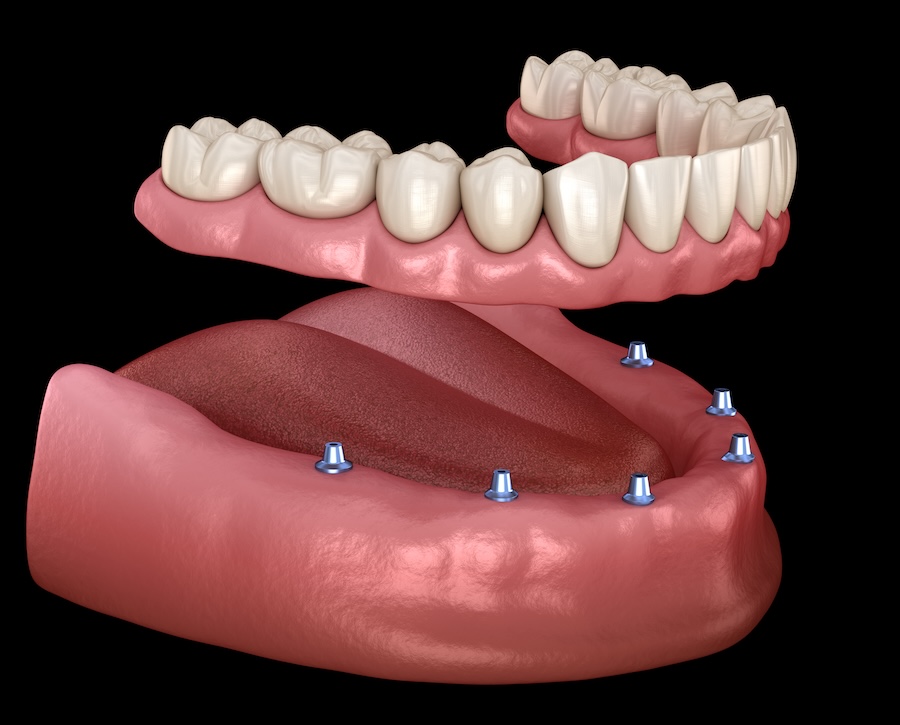
Dental implants are small posts placed into the jawbone where teeth are missing. After the implants heal and become stable in the bone, attachments can be added so the denture connects to them. The denture still rests in the mouth, but now it has secure anchor points underneath.
For many patients, the denture remains removable. You can take it out for cleaning, then place it back onto the implant attachments when you are ready to wear it. Dr. Patel will show you how the denture connects and how much pressure is needed to seat or remove it.
The biggest change is usually the amount of movement. A denture that once lifted or slid during chewing can feel much steadier once it is connected to implants. Instead of constantly checking where the denture is sitting, you can spend more of the meal thinking about the food.
Eating With a More Stable Denture
Loose dentures tend to shrink the menu over time. You may stop eating apples unless they are sliced, skip crusty bread, or choose softer meat because you know firmer foods are more likely to move the denture. It can happen gradually enough that you do not realize how many foods you have started avoiding.
With implant support, the denture is better able to stay in position while you chew. That can make firmer foods easier to manage once healing is complete and Dr. Patel has cleared you to return to them. You may still need to cut certain foods into manageable pieces, but you should not have to spend the whole meal wondering whether the denture is about to shift.
Right after implant treatment, however, your diet will be softer while the area heals. Dr. Patel will tell you when to move from softer foods back toward your normal diet. There is no need to rush the process, especially while the implants are becoming stable in the jaw.
A More Stable Denture Can Help With Speech Too
A loose denture does not only move when you chew. It can also lift when you speak, especially if the tongue pushes against it during certain sounds. Once you start expecting that movement, you may catch yourself speaking more carefully than you used to.
With implant support, the denture has less freedom to slide around while the tongue moves. That gives your tongue a more consistent surface to work against. As you get used to the fit, speech usually becomes less of something you have to think about.
You may notice a few words feel different at first, especially if the new denture has a slightly different shape than the old one. That adjustment usually improves as you talk throughout the day. If a particular area feels bulky or interferes with speech, let us know so Dr. Patel can check the fit.
If You Are Using More Adhesive Than You Used To
Denture adhesive can help with retention, but it should not have to compensate for a denture that no longer fits well. If you have gone from using a small amount to applying it several times a day, that usually deserves a closer look. The same is true if the denture still moves even after you have applied adhesive.
Dr. Patel can check whether the denture needs a reline, whether the bite has changed, or whether the denture has worn enough that replacement would be better. If the denture itself still fits reasonably well but lacks enough support, implants may be part of the solution. The point is to find out why it is moving before you keep adding more adhesive.
Bring the denture with you exactly as you normally wear it. If you use adhesive, tell us where you put it and how often you reapply it. That helps Dr. Patel see what you are dealing with at home instead of only seeing the denture sitting still in the chair.
Sometimes the Denture Needs a Reline or Replacement First
A loose denture does not always mean implant treatment is necessary. If the underside no longer matches the gums closely enough, a reline may improve the fit. If the denture is old, worn, cracked, or has been repaired several times, a new denture may make more sense.
The bite also deserves attention because a denture can rock when the teeth do not meet evenly. One side may hit harder than the other, causing the denture to tip each time you chew. Dr. Patel can check those contacts and see whether an adjustment improves the movement.
If those changes solve the problem, implants may not be needed. However, if the denture still lacks stability even after the fit and bite are corrected, implant support becomes much more relevant. That is when the conversation shifts from improving the denture itself to improving what is holding it in place.
Your Jawbone Has to Be Checked Before Implants
Dental implants need healthy bone for support, so imaging is an important part of the evaluation. Dr. Patel will look at how much bone is available, where it is located, and whether there is enough room to place implants safely. He will also examine the gums and the shape of the ridge underneath the denture.
If you have worn dentures for many years, the ridge may be smaller than it once was. That does not automatically rule out implants, but it can affect where they are placed and whether additional treatment is needed first. The lower jaw and upper jaw can also have very different amounts of available bone.
Once Dr. Patel reviews the imaging, he can show you where implants may be placed and what kind of denture they could support. You will have a clearer picture of what is possible in your mouth rather than relying on a general description of implant dentures.
Your Health History Is Part of the Implant Plan
Before implant treatment, we also need an updated picture of your overall health. Dr. Patel will review your medications, medical conditions, previous surgeries, and anything else that could affect healing. If something has changed since your last dental visit, bring it up during the consultation.
That includes prescription medications, over-the-counter medicines, and supplements. Certain medications and health conditions can influence how the bone and gums heal after implant placement. Smoking and tobacco use should also be discussed because they can interfere with healing around implants.
Be sure to mention any recent changes in your health or medications, even if they seem unrelated to your teeth. Those details can affect how Dr. Patel plans implant treatment and healing.
How Many Implants Does a Denture Need?
There is not one implant number that works for every denture. The amount of bone, the shape of the jaw, the bite, and the type of denture all affect the design. A lower removable denture may use a different number of implants than another type of implant-supported restoration.
Dr. Patel will decide where implants can be placed after reviewing your imaging and examining the mouth. Their position is just as important as the number because the denture needs balanced support. A treatment plan built around your jaw will usually look different from one built for someone else.
If a friend tells you they have a certain number of implants under their denture, that does not mean you will need the same setup. Their bone and denture design may be completely different. Dr. Patel can show you the arrangement he recommends and explain how the denture would connect.
What Happens When the Implants Are Placed
Once the plan is ready, the implants are placed into selected areas of the jaw while the area is thoroughly numbed. Afterward, some tenderness and swelling are common during the first few days. You will leave with instructions for eating, cleaning the area, and keeping the surgical sites comfortable.
Then the implants need time to heal within the bone. Depending on your treatment, you may use a temporary denture or a modified version of your current denture while that healing takes place. Dr. Patel will explain what you can wear during this stage before surgery.
Follow-up visits give us a chance to check the gums and implants as they heal. Once everything is ready, the denture attachments can be completed and adjusted. If the denture is removable, we will also show you how to take it in and out without forcing the attachments.
Can Your Current Denture Be Used?
Sometimes an existing denture can be modified to work with implants, although it needs to be in good condition. Dr. Patel will check the fit, bite, strength, thickness, and available room for the implant attachments. A denture that is already badly worn or unstable may not be worth rebuilding around.
If your current denture is still strong and fits well enough, modification may be possible. If not, a new denture can be made specifically for the implants. Starting fresh can also allow the bite and appearance to be redesigned at the same time.
Bring your existing denture to the consultation even if you already know you want something different. The wear on it can show where you have been chewing hardest and where movement has been happening. Those marks can tell Dr. Patel quite a bit before he ever starts planning the new one.
Cleaning Around Implant-Supported Dentures
Implants give the denture more stability, but they still need daily cleaning. Food and plaque can collect around the attachments and along the gums, so those areas need regular attention. If the denture is removable, you will clean the denture separately as well.
Our team can show you how to clean around the implants and which areas are easiest to miss. A soft toothbrush and smaller cleaning tools may be recommended depending on the attachment design. Once you know where everything sits, the routine usually becomes fairly straightforward.
Regular dental visits are still important because the denture and attachments can change with use. Dr. Patel can check the gums, implants, bite, and connecting parts during those visits. If something starts wearing or loosening, it can often be handled before the denture starts moving more noticeably.
The Attachments May Need Maintenance Over Time
The small components that connect the denture to the implants are used every day. Over time, they can wear and may need adjustment or replacement. You may notice the denture no longer feels quite as secure when you seat it.
That does not necessarily mean there is a problem with the implant in the bone. Often, the attachment itself is simply worn. Dr. Patel can check the connection and replace components when needed.
If the denture suddenly starts feeling looser, bring it in rather than reaching for more adhesive. The problem may be in one small attachment rather than the whole denture. Catching that early can keep the repair fairly simple.
Sore Spots Are Worth Checking
A loose denture can rub the same area of gum every time you chew. You may notice one spot becomes tender by the afternoon or burns when you eat something salty. If that keeps happening, the denture should be checked.
Avoid filing or grinding the denture at home, even if you think you know exactly where it is rubbing. Removing a little material in the wrong place can create a new pressure point or change the way the denture sits. Bring it in so Dr. Patel can adjust the area without throwing off the rest of the fit.
If the soreness is coming from movement rather than one high spot, the solution may involve more than a simple adjustment. That is where a new denture or implant support may need to be discussed. Repeated sore spots usually tell us the denture is not sitting as steadily as it should.
Tell Dr. Patel What You Have Stopped Eating
One of the best things you can bring to an implant consultation is a short list of what has become difficult. If you stopped eating salads because chewing feels awkward, avoid sandwiches because the lower denture lifts, or cut everything into tiny pieces before taking a bite, tell us. Those details show exactly how the denture is affecting your day.
Mention speech changes too, along with sore areas or heavy adhesive use. If the denture feels fine until you start eating, say that as well. A denture can look reasonably stable during an exam and still move every time real chewing starts.
Specific examples are especially helpful. Saying, “It comes loose when I bite into bread,” or “I have to press it back down when I chew,” tells Dr. Patel exactly what the denture is doing during meals.
How Dr. Patel Decides Whether Implants Could Help
Dr. Patel will examine your denture, gums, bite, and jaw, then review dental imaging to see how much bone is available. He will also ask what you want to improve, whether that is chewing, speech, comfort, or simply getting the denture to stay in place. From there, he can determine whether the problem can be handled by changing the denture or whether implants would add the support you are missing.
If implant treatment is appropriate, he can explain how many implants are recommended, where they would be placed, and how the denture would attach. You can also talk about healing time, what you will wear during treatment, and how the denture will be maintained afterward. Those are the questions that usually come up once people start picturing how treatment would fit into everyday life.
You may be wondering whether you will be able to enjoy steak again, how long the healing period takes, or how much work the denture needs at home. Those are often the questions people care about most once they start seriously considering implants. Dr. Patel can talk through the practical side of treatment so you have a better sense of what eating, cleaning, and recovery may look like.
Implant-Supported Dentures at Cary Family Dental in Cary
If your denture shifts when you chew, needs more adhesive than it used to, or leaves the same sore area by the end of the day, bring it in and let Dr. Patel take a look. The solution may be an adjustment, a reline, a new denture, or dental implants that give the denture more support. You do not have to decide which one before you come in.
At Cary Family Dental in Cary, Dr. Niraj Patel can evaluate the denture you are wearing now and the jaw underneath it. Bring the denture with you and tell us what happens during meals, where it moves, and which foods have become harder to eat. That gives us something real to work from.
If you are ready to find out whether implants could give your denture a steadier hold, schedule a consultation with Dr. Patel at Cary Family Dental. We can look at the fit, review your bone, and talk through the options that fit your mouth and your day-to-day needs. We would be happy to welcome you in and help you get more comfortable with your denture again!