
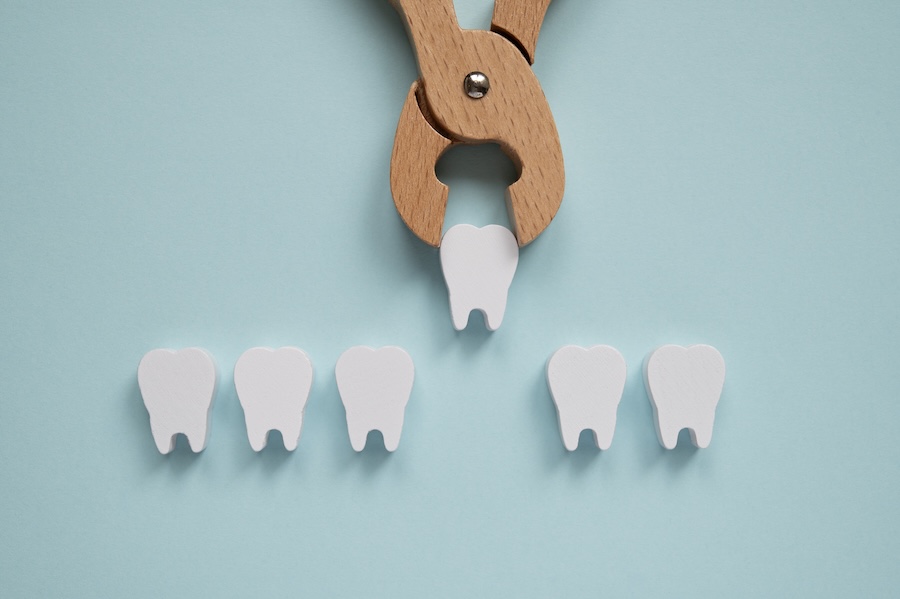
Most of the time, we want to keep a natural tooth whenever it still has a good path forward. Fillings, crowns, root canal treatment, and periodontal care can all help preserve teeth that are damaged but still strong enough to function. However, there are times when a tooth has simply been through too much, and removing it becomes the healthier choice.
At Cary Family Dental in Cary, IL, Dr. Niraj Patel looks at the whole situation before recommending an extraction. He considers how much of the tooth is still usable, whether the root is intact, how much bone is supporting it, and whether infection or fracture has spread too far. If the tooth can still be treated with a reasonable long-term outlook, we will talk about that first; if not, extraction may stop the same area from continuing to cause pain, swelling, or repeat repairs.
If you have been chewing on the other side for weeks, waking up when the tooth starts throbbing, or noticing that a piece keeps breaking off, bring it in. Teeth can look worse than they really are, but they can also hide more damage than the mirror shows. An exam and X-rays give Dr. Patel a much clearer view of what is going on below the surface.
When a Tooth Cannot Be Rebuilt
A tooth can lose a surprising amount and still be restored, especially when the root is healthy and there is enough solid tooth above the gumline. As decay or fracture travels farther down, though, there may not be enough left for a filling or crown to hold up under everyday chewing. At that point, another repair may only buy a short amount of time.
Dr. Patel looks closely at where the damage ends and what is left around it. A broken corner near the top of the tooth may still be very treatable, while a fracture that extends deep below the gumline is much harder to work with. The same is true when decay has wrapped around a large portion of the tooth and left only thin walls behind.
Teeth with a long history of dental work can reach this point gradually. A filling may have been replaced, then enlarged, followed by a crown or root canal years later. If another fracture develops after that, there may simply not be enough tooth left to rebuild in a way that feels solid when you bite.
Severe Decay Can Leave Too Little Tooth to Save
Tooth decay can usually be treated long before extraction becomes part of the discussion. A smaller cavity may need a filling, while a larger one may need a crown. Even when decay reaches the pulp inside, root canal treatment can sometimes preserve the tooth.
The outlook changes when decay has destroyed a large portion of the tooth or spread far below the gumline. Treating the infection inside only solves one part of the problem, because the tooth still has to be rebuilt afterward. If there is not enough left to support a restoration, the tooth may remain fragile even after the infection is cleared.
That is also why a tooth can seem mostly fine until one ordinary bite takes off a big piece. Decay may have been weakening it underneath an old filling or crown for quite a while. Once that happens, Dr. Patel can see whether the remaining tooth is still workable or whether the damage has gone too far.
A Deep Crack or Split Tooth May Need to Be Removed
Cracked teeth can have very different outcomes depending on where the fracture runs. A crack that stays in the upper part of the tooth may sometimes be stabilized with a crown, while one that reaches the pulp may also need root canal treatment. If the root is still intact and the tooth can be reinforced, saving it may still be possible.
A fracture that continues into the root is more difficult. Bacteria can move into that space, the surrounding gum or bone may become involved, and the tooth can keep flexing every time you bite. If the tooth has split into separate sections or the root itself is badly fractured, long-term repair becomes much less predictable.
Dr. Patel may use X-rays, bite testing, and periodontal measurements to look for signs that the crack extends below the gumline. A narrow, deep pocket beside one area of the tooth can sometimes point to a deeper fracture. If the tooth cannot be stabilized well enough to handle normal chewing, extraction may be the better option.
An Infected Tooth Can Sometimes Still Be Saved
An infection does not automatically mean a tooth has to come out. Root canal treatment can remove infected or inflamed tissue from inside the tooth while preserving the root and outer shell. If enough of the tooth remains afterward, a crown or another restoration can often rebuild it.
However, infection becomes much harder to manage when it comes with a severe fracture, deep decay, or very little tooth left above the gumline. In those cases, clearing the infection does not solve the structural problem. Dr. Patel has to look at whether the tooth can still function once treatment is complete.
If you have swelling, throbbing pain, tenderness when biting, or a small bump on the gum that keeps coming back, call the office. Dental infections can worsen, especially if they are left alone because the pain temporarily eases. We would rather see what is happening early than have you spend another weekend hoping the swelling behaves.
Advanced Gum Disease Can Leave a Tooth Without Enough Support
Teeth depend on the surrounding bone and gum tissue to stay firmly in place. With advanced periodontal disease, that support can gradually be lost, and the tooth may start to move when you chew or bite. At first, the looseness can be slight, but it can increase as more bone is lost.
Dr. Patel will check the periodontal pockets around the tooth and review the bone level on X-rays. If enough support remains, periodontal treatment may help stabilize the area. When bone loss is extensive and the tooth has become very mobile, though, keeping it may no longer be practical.
A severely loose tooth can also make eating awkward. You may start steering food to the other side or avoiding anything that puts pressure on it. Once one tooth starts deciding how the rest of your mouth has to chew, it is time to have the area evaluated.
Repeated Dental Repairs Can Reach a Limit
Some teeth have a long dental résumé by the time extraction enters the picture. They may have had several fillings, a crown, root canal treatment, or repairs after previous fractures. Each treatment may have kept the tooth going for years, but eventually the amount of original tooth left can become very limited.
Dr. Patel does not recommend extraction just because a tooth has had a lot of work. He still looks at the root, bone, bite, and how much usable structure remains. But if the same tooth keeps cracking, developing new decay, or needing another large repair, another round of treatment may not be the best long-term answer.
If you feel like one tooth keeps finding its way back onto the treatment plan, mention that. The history can show whether the tooth has been holding up or simply limping from one repair to the next. Sometimes that pattern is what finally makes extraction the more sensible choice.
Wisdom Teeth Can Create Their Own Problems
Wisdom teeth often cause trouble because there simply is not enough room for them to come in normally. They may grow at an angle, stay partly trapped under the gum, or press against the molar in front of them. Because they sit so far back, keeping them clean can also be difficult.
A partially erupted wisdom tooth can leave a pocket of gum tissue where food and bacteria collect. That can lead to repeated soreness, swelling, or infection in the back of the mouth. Some wisdom teeth also develop cavities simply because the toothbrush never quite reaches them well enough.
Dr. Patel can evaluate their position with an exam and dental imaging. If a wisdom tooth keeps causing inflammation, decay, or problems for the neighboring molar, removal may be recommended. If it is healthy, fully erupted, and easy to clean, it may just be monitored.
A Tooth May Need to Come Out Before Other Treatment
Sometimes an extraction is one part of a larger dental plan. A tooth that cannot be restored may need to be removed before a dental implant can eventually replace it. In other situations, taking out a badly damaged tooth can give the surrounding area a cleaner start for restorative treatment.
The timing depends on what comes next. Some replacement options can be discussed before the extraction, while others require healing first. Dr. Patel can walk you through what will happen between removing the tooth and replacing it so you are not left wondering about the gap afterward.
If the missing space will be visible when you smile, bring that up before treatment. Depending on the tooth and the plan, a temporary option may be possible. That is much easier to sort out before the extraction than after you get home and suddenly start thinking about Monday morning.
What Dr. Patel Looks at Before Recommending an Extraction
Before recommending removal, Dr. Patel examines the tooth, the gum tissue around it, and the way it fits into your bite. X-rays can show the roots, surrounding bone, decay, infection, and changes that cannot be seen above the gumline. Those pieces together tell us whether the tooth still has a realistic path to treatment.
Your symptoms help fill in the rest. Tell Dr. Patel if the tooth hurts when you bite, wakes you at night, reacts strongly to temperature, feels loose, or has broken before. If swelling comes and goes, mention how often that happens and whether you notice a pattern.
Once the exam and imaging are complete, Dr. Patel can explain what options remain. If the tooth can be saved, he can show you what treatment would be needed. If extraction is recommended, he can point out exactly what is making the tooth difficult to keep and what the next steps could look like.
What Happens During a Tooth Extraction
Before the extraction begins, Dr. Patel thoroughly numbs the area with local anesthetic. You may still feel pressure or movement during the procedure, but the area should not feel sharp or painful. He can also explain what to expect beforehand so you are not lying there trying to decode every sound.
The way the tooth is removed depends on its condition and position. A fully erupted tooth with straightforward roots may be relatively simple to remove, while a badly broken, impacted, or unusually shaped tooth can require a more involved approach. The X-rays help Dr. Patel plan for those differences before treatment starts.
After the tooth is removed, gauze is placed over the area so a blood clot can begin forming in the socket. That clot protects the bone and nerves underneath during early healing. Before you leave, we will go over eating, bleeding control, cleaning, and what to avoid during the first few days.
The First Day Is About Letting the Socket Settle
Once you get home, the extraction site needs a quiet start. Bite on the gauze as directed, avoid vigorous rinsing, and try not to keep touching the socket with your tongue. That little space can be very tempting to investigate, but leaving it alone is the better move.
For food, stick with softer options and chew on the opposite side. Eggs, yogurt, applesauce, mashed potatoes, and similar foods are easier to manage while the area is tender. Crunchy, sticky, very hot, or especially chewy foods can wait until the mouth has had more time to settle.
You should also avoid straws for as long as Dr. Patel recommends because suction can disturb the clot. Smoking and vaping can interfere with healing as well and increase the risk of complications. A few careful days at the beginning can save you from a much more annoying week afterward.
Soreness and Swelling Can Follow the Procedure
As the local anesthetic wears off, some tenderness around the socket is expected. Swelling may also develop during the first day or two, especially after a more involved extraction. Dr. Patel will give you instructions for managing discomfort based on the procedure and your health history.
The area should gradually feel better as the days pass. You may notice some soreness when chewing nearby or when opening wide, but that should ease rather than build. The first evening may feel a little clumsy, especially if you are still numb and trying to eat around the area.
If pain becomes stronger instead of easing, call Cary Family Dental. Increasing swelling, persistent bleeding, fever, or other symptoms that seem to be getting worse should also be reported. Dr. Patel may want to check the extraction site.
Dry Socket Can Cause Pain a Few Days Later
A blood clot normally protects the socket after the tooth is removed. If that clot is lost too early or does not form properly, the bone underneath can become exposed and painful. That condition is known as dry socket.
The pain often shows up a few days after the extraction and can be stronger than the soreness you felt right afterward. It may travel toward the ear, jaw, or side of the face, and some people notice an unpleasant taste or odor as well. If you were starting to feel better and then the pain suddenly takes a sharp turn, call us.
Dr. Patel can examine the socket and treat the area if dry socket has developed. Do not pack the socket yourself or place home remedies inside it. A quick visit can usually get you more comfortable without making the area angrier.
What Happens to the Space After the Tooth Is Removed
Once a tooth is removed, the next question is often what to do with the space. That depends on which tooth was lost, how your bite works, the condition of the neighboring teeth, and your overall dental plan. Some spaces can be left alone, while others are better replaced.
Replacement options may include a dental implant, bridge, or removable partial denture. Each works differently and comes with its own timeline and maintenance needs. Dr. Patel can discuss those choices before the extraction when possible, especially if replacing the tooth is already part of the plan.
If a dental implant is being considered, the bone at the extraction site also needs to be evaluated. Bone grafting may sometimes be recommended to preserve or rebuild the area for future implant placement. Thinking about that early can keep the treatment from feeling pieced together later.
When Removing the Tooth Can End a Cycle of Problems
Some teeth reach a point where you are constantly working around them. You chew on the other side, avoid cold drinks, keep pain relievers handy, or hope the swelling settles before dinner plans. That routine can quietly take up more mental space than one tooth should.
If the tooth cannot be restored with a good outlook, removing it can stop repeated episodes of pain or infection and allow the area to heal. Once that happens, attention can shift toward replacing the tooth when needed and getting your bite back to a more comfortable place. For many people, that is a much cleaner path than waiting for the same tooth to flare up again.
Dr. Patel will still look for a reasonable way to save the tooth first. If the root, support, and remaining tooth can still work together, treatment may be possible. When they cannot, extraction may be the healthier direction.
Tooth Extractions at Cary Family Dental in Cary, IL
If you have a tooth that keeps breaking, swelling, hurting when you chew, or simply never seems to settle down, bring it in for an evaluation. Dr. Niraj Patel can examine the tooth, review the X-rays, and see whether it can still be treated successfully. If extraction is recommended, he can explain what he is seeing and what your options are afterward.
At Cary Family Dental in Cary, IL, we know most people would rather not spend much time thinking about a tooth extraction. We also know how tiring it can be when one problem tooth starts influencing what you eat, how you sleep, or which side you chew on. Getting a clear answer can take that tooth out of the center of your day.
If a tooth has been giving you trouble or you have already been told it may need to come out, schedule a visit with Dr. Patel at Cary Family Dental. We can take a closer look, talk through whether the tooth can still be saved, and plan what comes next if extraction is necessary. We would be glad to welcome you in and help you get that tooth taken care of!