
Sleep should help you recharge — not leave you groggy and drained. But for many people with sleep apnea, restful sleep is elusive. This condition doesn’t just make you tired; it can affect your heart, mood, focus, and overall well‑being. You might not connect dental care with sleep issues at first, but dentists play a meaningful role in spotting, evaluating, and managing sleep apnea — especially with custom oral appliances that help many people sleep more soundly.
At Cary Family Dental in Cary, IL, Dr. Niraj Patel works with patients who struggle with disrupted sleep, loud snoring, or diagnosed sleep apnea. He helps patients understand how an oral appliance can keep the airway open and reduce interruptions, often in a more comfortable way than bulky masks or machines.
What Is Sleep Apnea, Really?
Sleep apnea happens when your airway becomes partially or fully blocked while you’re asleep. Instead of smooth, continuous breathing, you may hit pauses, shallow breaths, or frequent micro‑wakes throughout the night. Those interruptions are often invisible to you, but they show up as fatigue, morning headaches, irritability, or difficulty focusing during the day.
The most common form is obstructive sleep apnea (OSA), which occurs when soft tissues in the back of the throat collapse or block airflow. It’s not just a snoring problem — OSA is linked to higher blood pressure, cardiovascular issues, and mood changes if left untreated.
Why Dentists Are Part of the Sleep Apnea Picture
You might be wondering: Why would a dentist help with sleep apnea? The answer comes down to the mouth, jaw, and airway connection.
Dentists spend a lot of time examining oral structures — the jaw position, bite alignment, tongue space, and how your teeth come together. These same structures influence how your airway behaves when you’re upright and when you’re lying down asleep.
That puts dental professionals in a unique position to identify signs that something isn’t quite right:
- Wear patterns on teeth that suggest nighttime clenching or grinding
- A low, recessed jaw that makes airway collapse more likely
- Bite issues that affect jaw posture and airway space
- Complaints of morning headaches, dry mouth, or snoring
From there, a sleep evaluation can be coordinated with your physician or a sleep specialist. And when sleep apnea is diagnosed or suspected, an oral appliance may be recommended as part of your care.
Oral Appliances vs. CPAP: Different Tools for Different Needs
The most familiar treatment for sleep apnea is a CPAP machine (Continuous Positive Airway Pressure). It uses a mask and steady airflow to keep your airway open. CPAP works very well for many patients, but some find the mask uncomfortable or disruptive.
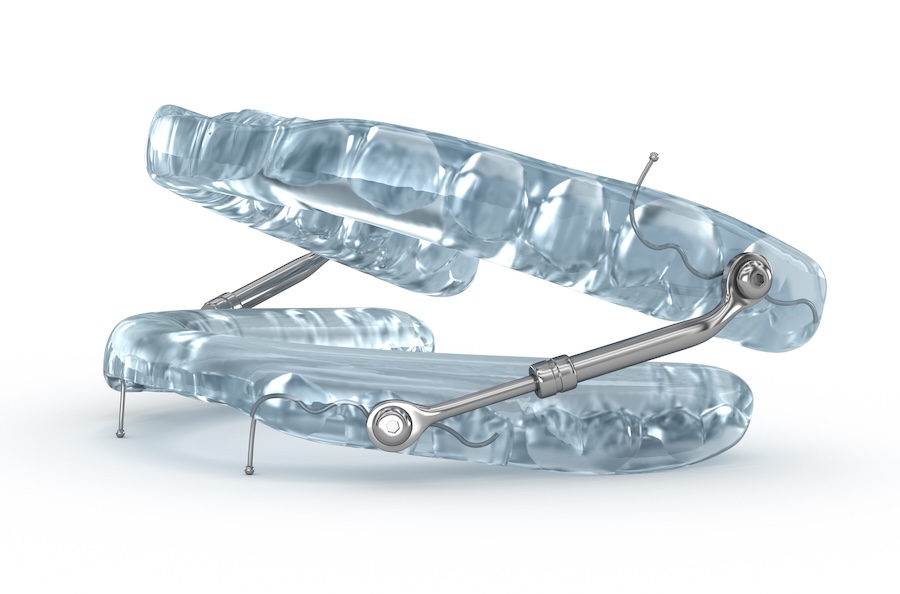
Oral appliances are a different option. These are custom‑fitted devices your dentist makes to wear in your mouth at night. They work by gently repositioning the jaw and tongue to help keep the airway open while you sleep. A well‑fitted oral appliance can reduce the number of breathing interruptions and improve sleep quality, often with a smaller device and greater comfort than a mask.
These devices aren’t one‑size‑fits‑all. They’re molded to your anatomy and adjusted during follow‑up visits, so they support you comfortably and effectively.
What a Custom Oral Appliance Does
An oral appliance looks a bit like a clear retainer. But functionally, it’s designed to do something very specific: move your lower jaw forward just enough to keep your airway open. By nudging the jaw slightly forward and stabilizing the tongue, the device reduces the likelihood that soft tissues will collapse back and block airflow while you sleep.
Compared with a CPAP machine, an oral appliance can be:
- Easier to get used to
- Quieter and less intrusive
- More portable for travel or overnight stays
- Simple to wear (no hoses or masks)
For patients with mild to moderate sleep apnea — or for those who can’t comfortably use CPAP — an oral appliance can be life‑changing.
What to Expect at Cary Family Dental
At your visit, Dr. Patel will start by talking with you about your sleep symptoms and dental history. You’ll go over questions about snoring, daytime tiredness, waking up gasping, or partner observations. From there, he’ll examine your airway, bite, and jaw position.
It’s common to coordinate care with your physician or a sleep specialist, especially if a sleep study hasn’t been done yet. Once sleep apnea is confirmed or strongly suggested, impressions or digital scans are taken so an oral appliance can be custom made for you.
Then comes fine‑tuning: as you begin using the device, follow‑up appointments help ensure the fit is right, your jaw is comfortable, and your sleep is improving.
Small Changes, Big Sleep Improvements
Oral appliances aren’t a quick fix — no treatment is — but for many patients they deliver noticeable improvements in sleep quality, less snoring, and better daytime energy. When the jaw is in a supportive position and the airway stays open more consistently, your body gets the uninterrupted rest it needs.
And because this approach is integrated with your dental care, the device fits smoothly into your overall oral health plan. You aren’t learning a new machine in isolation; you’re building on care that already considers your bite, jaw health, and comfort.
Sleep Apnea and Oral Appliances: A Team Approach
Sleep apnea is a condition with wide‑ranging effects on health and daily life. Wearing fitting oral appliances can be a valuable part of your treatment — especially for patients who want a comfortable, practical alternative or complement to other therapies.
If you’ve been struggling with snoring, daytime fatigue, or disrupted sleep, Cary Family Dental in Cary, IL can help you explore whether an oral appliance makes sense for your sleep health. Dr. Niraj Patel will talk through the options, help coordinate any needed sleep evaluations, and guide you to a solution that fits your situation.
Call Cary Family Dental today to learn more about oral appliance therapy and how dental care plays a role in better sleep — night after night.